
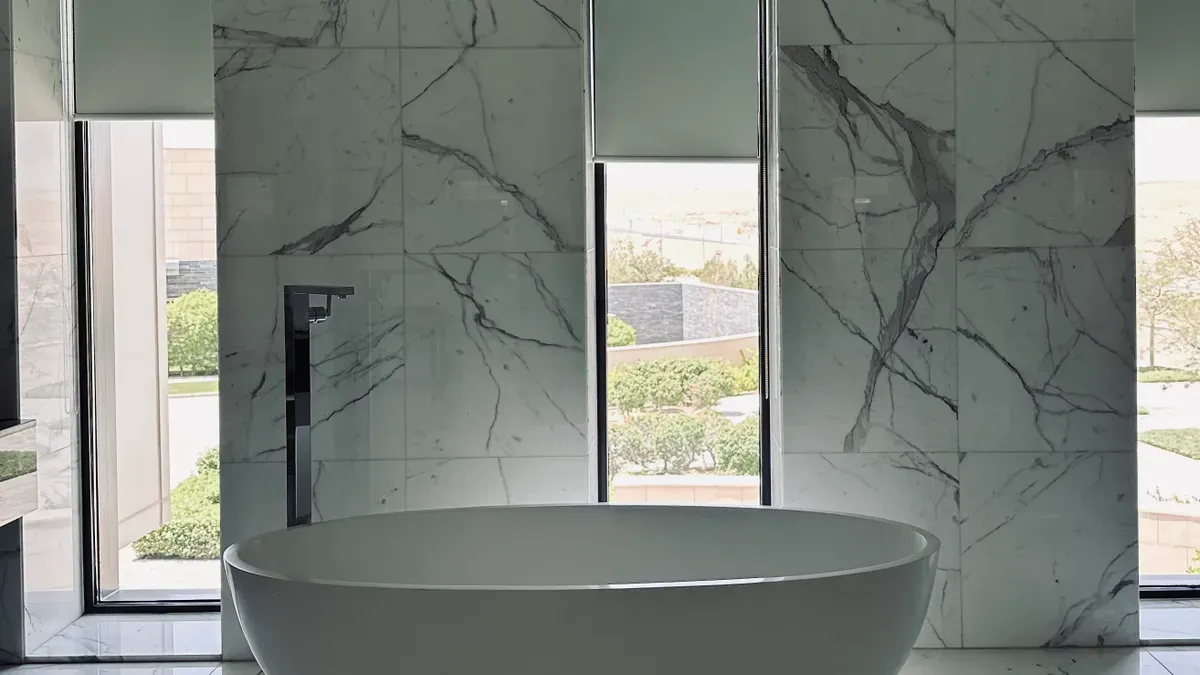
Is marble right for your kitchen or bathroom? Calacatta marble brings a touch of luxury with its bold veining and bright white surface. It stands out for beauty and value, but it requires regular maintenance, sealing, and careful use. The cost can reach $250 per square foot.
Verdict: Calacatta marble is best for luxury-focused spaces, especially bathrooms or low-use kitchens. It is not ideal for busy family kitchens due to its sensitivity to stains and etching.
Key Points
- Calacatta marble looks beautiful and has special lines. It is a fancy choice for kitchens and bathrooms.
- You need to take care of it often. Seal Calacatta marble every 6 to 12 months. This helps stop stains and damage.
- Think about how you use your space. Calacatta marble works better in places you do not use a lot. It can scratch and stain easily in busy kitchens.
Calacatta Marble Pros and Cons
When you look at marble countertops, Calacatta marble is known for its beauty and special look. But there are also some problems to think about. Let’s look at the main good and bad things so you can see if it works for your kitchen or bathroom.
Calacatta Marble Pros
- The veining is bold and makes each slab different.
- The white background makes rooms look brighter.
- It has a natural beauty that man-made things can’t copy.
- The shiny surface makes spaces look fancy and bright.
- Some slabs have gold flecks and different shades.
Designers like Calacatta marble because it makes rooms look bold and put together. Many people pick it for white marble countertops because it makes kitchens and bathrooms look better.
Tip: If you want a countertop that is truly special, Calacatta marble is a great choice.
Marble Countertop Pros: Beauty & Heat Resistance
Let’s see how marble countertops do with beauty and heat compared to other materials:
| Material | Max Heat Resistance | Can Handle Hot Pans? | Notes |
|---|---|---|---|
| Granite | Up to 1,200°F | Yes (short term) | Best for heat resistance |
| Quartz | ~300°F | No | Resin can burn |
| Marble | ~350°F | Not recommended | Can discolor with high heat |
Calacatta marble can take some heat, but it’s not the best if you put hot pans on it a lot. Still, many people choose marble because it looks so nice. The veining and color changes in white marble countertops are a big reason why it’s popular in fancy homes.
Calacatta Marble Cons
Now let’s talk about the bad parts. Calacatta marble is porous, so it can stain easily. Sour drinks like lemon juice, vinegar, wine, or coffee can make dull spots. This is a big problem for busy kitchens.
- It can stain if you spill things.
- You need to seal it often to keep it safe.
- It can scratch or chip easier than granite.
- You have to take care of it more than quartz or porcelain.
- Putting it in is hard and can cost more.
long-term dulling
After a while, white marble countertops can lose their shine. This happens from using them every day, cleaning, and touching sour foods. Even if you clean carefully, the surface may not look as shiny after a few years. You can get a pro to polish it and make it shiny again, but this costs more money.
sealing frequency
You must seal Calacatta marble. Here’s how often you should seal it, depending on where you use it:
| Environment Type | Recommended Sealing Frequency |
|---|---|
| High-humidity areas | Every 6-12 months |
| Low-traffic areas | Every 3-5 years |
| Kitchen countertops | Every 6 months |
If you want your white marble countertops to stay pretty, you need to seal them on time. If you skip sealing, you can get stains and damage that won’t go away.
etching from lemon/vinegar
Etching is a common problem with marble countertops. When sour foods like lemon juice or vinegar touch the surface, they react with the marble and leave dull spots. Calacatta marble is very sensitive to etching because of what it’s made of. Unlike quartz countertops, marble will show these marks unless you clean up spills right away.
Note: Etching is not the same as staining. Stains change the color, but etching changes how the surface feels and shines.
Cons: Porosity, Maintenance & Cost
Here are the main bad things about Calacatta marble:
- Porosity: Marble can soak up liquids and get stains.
- Maintenance: You need to seal it, clean with pH-neutral products, and keep away from sour spills.
- Cost: Calacatta marble is one of the most expensive choices. The marble countertop cost includes the material, putting it in, and taking care of it.
- Installation Complexity: Marble slabs can break when you put them in. Matching the veining takes skill, which can make labor cost more.
Average Maintenance Costs:
- Sealing: $50-$150 per year
- Polishing: $200-$500 every 3-5 years
- Etch or chip repair: $150-$400 per visit
In ten years, the total cost for white marble countertops can be $1,500-$4,000 just for care.
If you want marble countertops but want something easier to care for, quartz or porcelain could be better.
Summary Table: Calacatta Marble Countertops Pros and Cons
| Advantages | Disadvantages |
|---|---|
| Aesthetic superiority | Susceptible to staining and etching from acidic liquids |
| Unique veining and natural beauty | Requires regular sealing and special cleaning |
| Reflective properties | Prone to long-term dulling and scratches |
| Thermal resistance (moderate) | High cost and complex installation |
When you think about the marble countertops pros and cons, think about your life and how much time you want to spend taking care of them. Calacatta marble is beautiful, but it’s not for everyone. If you love how it looks and don’t mind the work, it can make your home look amazing.
Calacatta Marble in Kitchens
Pros for Kitchen Use
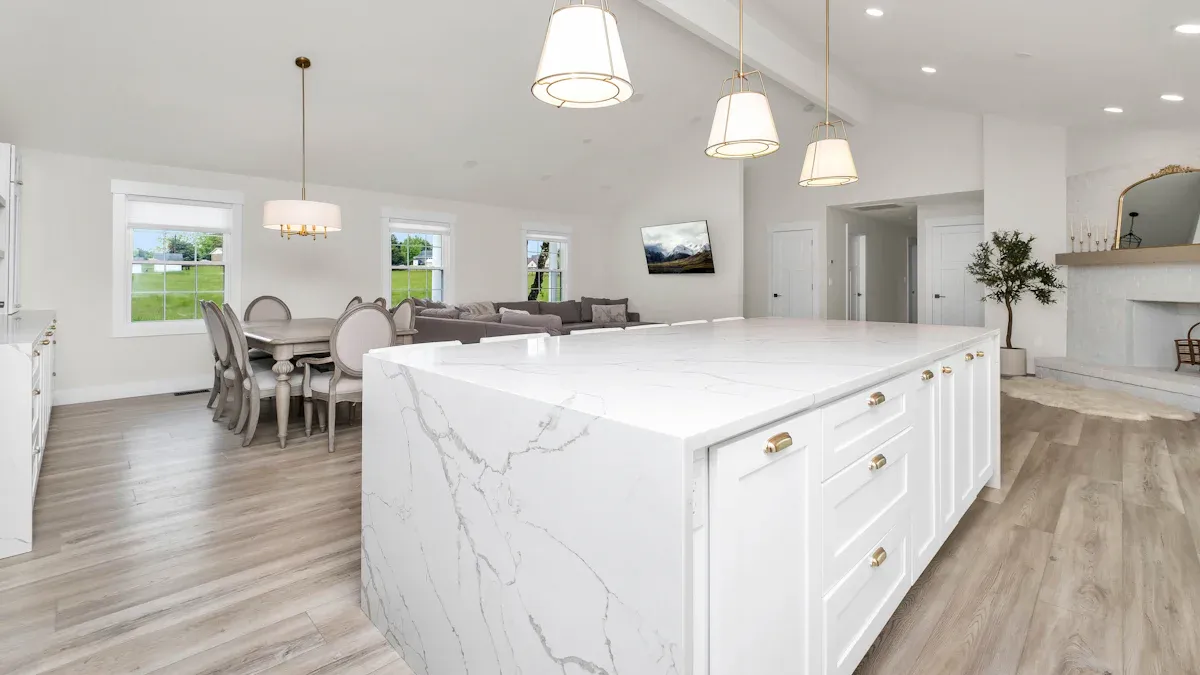
Calacatta marble makes any kitchen look fancy. Many people pick it for countertops because of its bold lines and bright white color. This stone always looks good. It works in modern, classic, or farmhouse kitchens. Real estate agents say marble countertops can make homes worth more.
Its suitability depends heavily on usage intensity and maintenance tolerance.
Interior designers like Calacatta marble for many reasons:
- The bold lines give kitchens a cool look.
- It is rare, so it feels special and fancy.
- Marble lasts a long time if you take care of it.
- It fits with many kitchen styles.
- Marble countertops can help your home sell for more.
Calacatta marble is famous for its bold lines. The thick lines look great on the white marble countertops. This makes your kitchen feel unique. It goes well with wood, metal, or painted cabinets. Many kitchen makeovers use marble countertops because they look nice and work with many designs.
Tip: If you want a kitchen that is bright and fancy, Calacatta marble countertops are a great pick.
Cons for Kitchen Use
Marble countertops can present long-term usability challenges in busy kitchens. Marble is softer than granite, so it scratches more easily. Kitchen tools can leave marks on it. Marble is porous, so it soaks up liquids. Spills from juice, wine, or coffee can stain white marble countertops if not cleaned up fast.
Some common problems are:
- Etching from sour foods like lemon or vinegar.
- Scratches from knives or heavy pots.
- Stains from spills.
- You need to seal marble often to keep it safe.
- It costs more to put in and take care of.
Marble countertops need gentle cleaning and sealing often. How long marble lasts depends on how you care for it. If you want easy kitchen countertops, marble may not be right for you. Repairs and sealing can cost a lot over time. In kitchens with lots of cooking, marble countertops can lose their shine and strength faster.
Calacatta Marble in Bathrooms
Pros for Bathroom Use
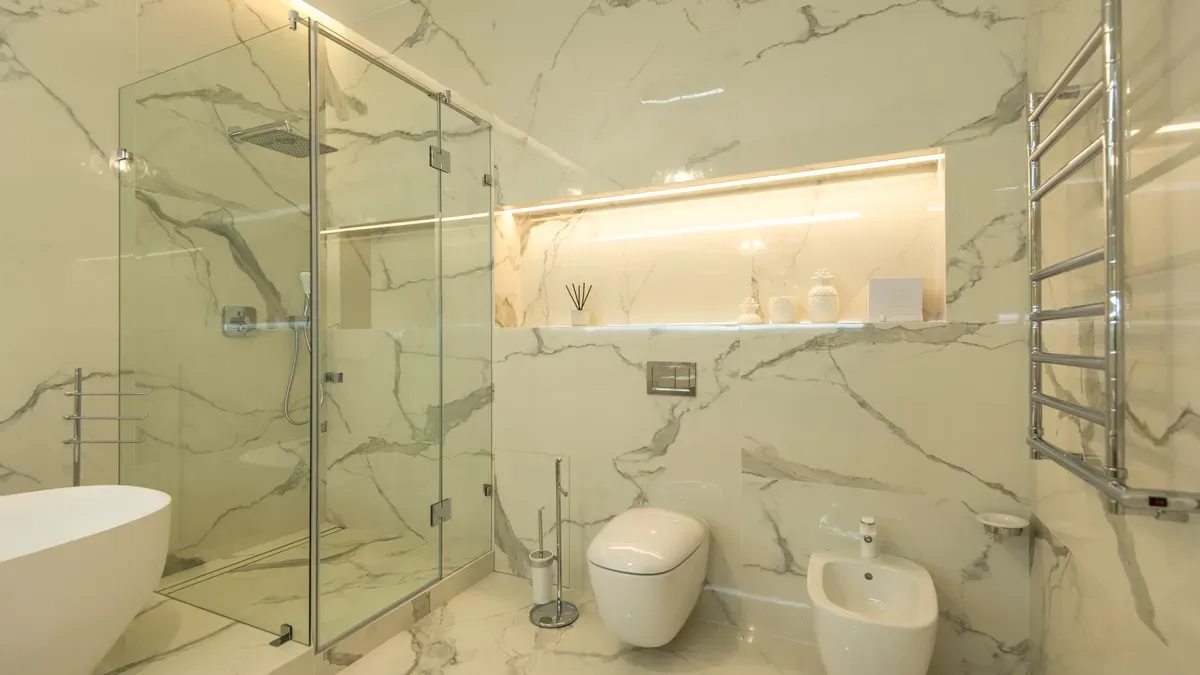
Calacatta marble makes bathrooms look fancy. Many people like how white marble countertops make bathrooms feel bright. The bold lines and shiny surface can turn a plain vanity into something special. If you want your bathroom to feel like a spa, marble countertops are a great choice.
- Calacatta marble has unique patterns. Each slab looks different.
- The surface bounces light, so small bathrooms look bigger.
- Real estate experts say marble countertops can make your home worth more.
- Designers pick marble for fancy bathrooms because it looks elegant.
“Calacatta marble has small changes that make each piece special. Clients always notice the natural beauty it adds to their homes.” — Laura Chen, Architectural Consultant
A new report says Calacatta marble in bathrooms can raise your home’s value. That is good if you want your home to stand out.
Cons for Bathroom Use
Marble countertops have some problems in bathrooms. Calacatta marble is more porous than other stones, so it can soak up water and stain. You need to seal your bathroom countertops often. Acidic products, like some cleaners or beauty items, can leave dull spots on white marble countertops.
- Marble needs sealing and gentle cleaning often.
- Spills must be cleaned up fast to stop stains or dull spots.
- Marble countertops cost more than granite or quartz.
- Marble is not as tough as other stones, so it can scratch or chip.
If you want a bathroom that is easy to care for, marble may not be the best. But if you love how it looks and do not mind the extra work, Calacatta marble can make your bathroom feel special.
Calacatta Marble vs. Alternatives
Picking the best countertop can be hard. Let’s see how marble is different from other choices for kitchens and bathrooms.
Quartz Countertops
Quartz countertops are great for busy families. They do not soak up spills or stains. You do not have to seal them, so cleaning is simple. Quartz does not scratch easily and can handle lots of use. It can look like white marble countertops, but it does not have the same special lines as real stone.
| Feature | Quartz Countertops | Calacatta Marble |
|---|---|---|
| Durability | Highly durable, resists scratches and stains | Prone to scratches and stains |
| Maintenance | Low maintenance, no sealing required | Requires periodic sealing |
| Value | Long-term value, engineered material | Natural stone, can be costly |
Tip: Quartz is a good pick if you want kitchen countertops that are easy to clean and strong for daily use.
Granite Countertops
Granite is also a popular choice for countertops. It comes in many colors and patterns. Granite is strong and can take heat, but it is still porous. You need to seal it, just like marble. Granite has small dots, while marble countertop design has bold lines and bright backgrounds.
| Feature | Calacatta Quartz Stone | Granite |
|---|---|---|
| Durability | Scratch and stain-resistant, highly durable | Durable but porous, requires sealing |
| Maintenance | Low maintenance, no sealing required | Requires regular sealing and upkeep |
| Aesthetic Consistency | Uniform with bold veining | Natural variations, inconsistent patterns |
| Hygiene | Non-porous, prevents bacteria growth | Porous, can trap bacteria if unsealed |
Granite lasts a long time, but it does not look as fancy as marble countertop design. If you want a classic look, both granite and marble countertops are good, but marble has special lines that stand out.
Porcelain & Other Materials
Porcelain countertops are becoming more popular. They are strong, do not stain, and do not need sealing. Porcelain can look like marble, granite, or even wood. It is light, so it is easier to put in. But porcelain can chip if you drop something heavy, and there are not as many edge styles.
| Material | Advantages | Disadvantages |
|---|---|---|
| Calacatta Marble | Elegant appearance, unique veining | Soft and porous, prone to staining and scratching, requires regular sealing |
| Porcelain | Highly durable, scratch-resistant, non-porous, low maintenance | Vulnerable to chipping, limited edge profile options, lower perceived resale value than marble |
| Quartz | Durable, non-porous, mimics marble aesthetics | Can be expensive, may not have the same unique veining as natural stone |
| Granite | Durable, heat-resistant, available in various colors | Requires sealing, can be heavy and difficult to install |
In most real-world cases, the choice depends more on maintenance tolerance than appearance alone.
Note: Porcelain and quartz give you more choices for marble countertop design, but only marble gives you the real, natural look.
Marble usually costs more than quartz, granite, or porcelain. If you want a special look and do not mind extra care, calacatta marble is a good choice. For easy cleaning and less worry, quartz or porcelain might be better for your home.
Care and Maintenance Tips
Cleaning Calacatta Marble
Keeping your marble looking beautiful is easier when you know what to do. Always clean up spills right away, especially if you drop acidic liquids like lemon juice or tomato sauce. These can leave a stain or dull spot if left too long. Use a soft, damp cloth to wipe the surface, then dry it with another cloth to stop water spots. For daily cleaning, pick a pH-neutral cleaner made for natural stone. Never use harsh chemicals or rough scrubbers. They can scratch or damage the marble.
Tip: Use coasters for drinks and trivets for hot pans to help protect your marble countertop.
Sealing & Protection
Sealing marble is a big part of marble countertop maintenance. which is essential for preventing long-term surface degradation. A good seal helps keep out stains and makes cleaning easier. Experts say you should reseal Calacatta marble every 6 to 12 months, depending on how much you use it and how much water it gets. You can check if your marble needs sealing by doing a simple water test. Drip a little water on the surface. If it beads up, your seal is still good. If the water soaks in and darkens the marble, it’s time to reseal. This helps with longevity and keeps your marble countertop lifespan as long as possible.
Preventing Stains & Damage
Marble can last for years if you take care of it. Here are some easy ways to prevent stains and damage:
- Clean up spills fast, especially from wine, coffee, or acidic liquids.
- Use only pH-neutral cleaners for regular cleaning.
- Blot spills instead of wiping to keep them from spreading.
- Always use a cutting board to avoid scratches.
- Place heat pads under hot pots and pans.
- Avoid using bleach, ammonia, or vinegar on your marble.
If you follow these steps, your marble will stay bright and beautiful for a long time.
Picking Calacatta marble means you like things that look fancy. You also need to be okay with taking care of it often. Think about what you want. Do you want something easy to clean or something that looks amazing? Calacatta marble is a good choice if you want it to last and do not mind the work. If your house is busy, quartz or granite might be better for you.
FAQ
Is Calacatta marble good for busy kitchens?
Calacatta marble looks great, but it scratches and stains easily. It works best in kitchens that do not get heavy use every day.
How often do I need to seal Calacatta marble?
You should seal it every 6 to 12 months. This keeps stains away and helps your marble stay beautiful.
Can I use regular cleaners on Calacatta marble?
No, regular cleaners can damage marble. Use a pH-neutral cleaner made for stone. This keeps the surface safe and shiny.