
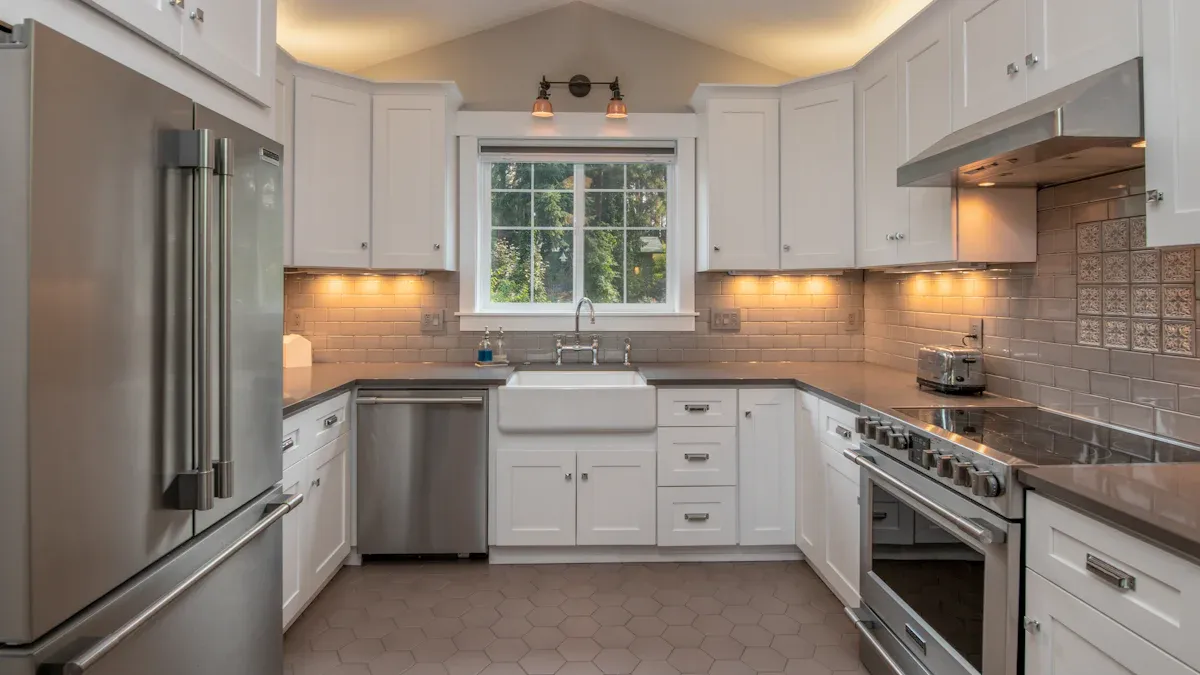
Wondering what the right kitchen cabinet height is for your space? The answer isn’t one-size-fits-all. Industry standards help, but your kitchen design should fit your home and your needs. Think about how your ceiling height changes your options. In many modern homes, kitchen cabinets stretch all the way up, making the most of vertical space. Your comfort matters too. A kitchen remodel should blend style and function so you enjoy every moment spent cooking or gathering.
Key Takeaways
- Check your kitchen size before picking cabinet heights. This helps you not make mistakes.
- Think about your ceiling height when choosing cabinets. Tall ceilings let you use full-height cabinets. These give you more storage.
- Make sure cabinet heights are comfortable for users. Change heights for different people. This makes cooking easier for everyone.
- Plan for the future by adding extra storage space. Use adjustable shelves for more options.
- Make sure appliances fit with cabinet heights. This keeps your kitchen working well and makes things easy to reach.
Standard Kitchen Cabinet Heights
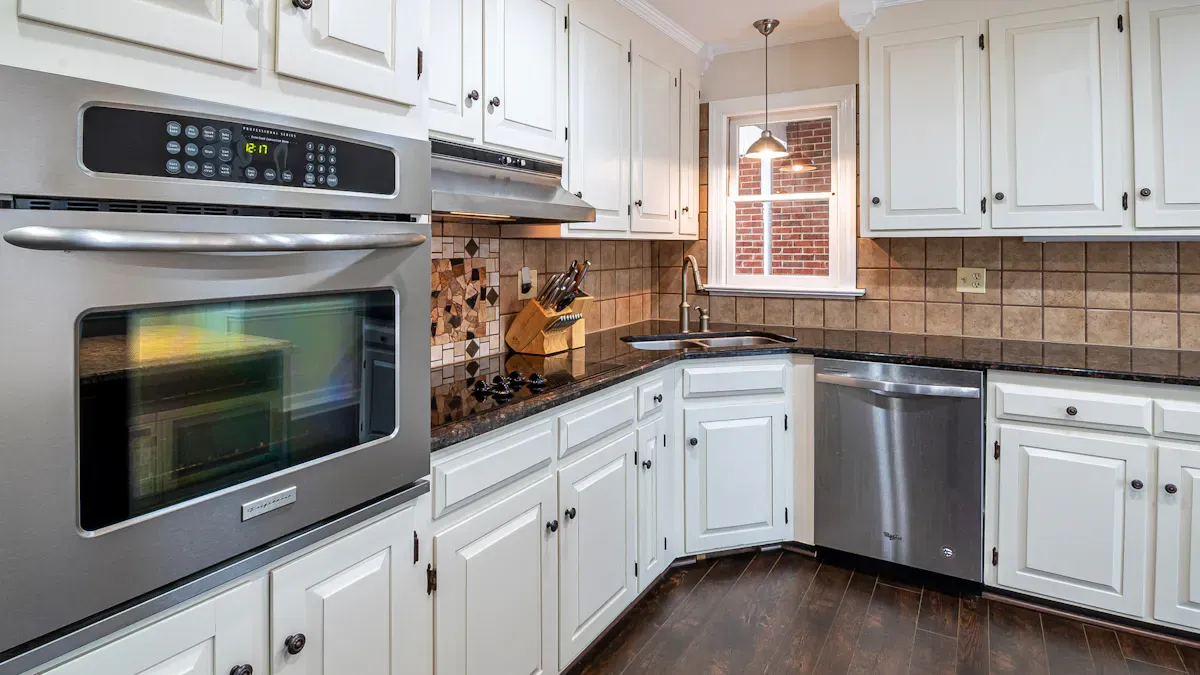
When you pick kitchen cabinet height, start with the basics. Let’s look at the usual cabinet heights and how they fit your kitchen.
Base Cabinet Heights
Base cabinets sit under your counters. They hold up sinks, stoves, and prep spots. The normal base cabinet is 34.5 inches tall. Countertops add about 1.5 inches, so the total is 36 inches. This is the usual height for comfort in kitchens. Most people find this height good for cooking tasks.
- Standard base cabinet height: 34.5 inches
- With countertop: 36 inches total
- Works with most appliances and helps with cooking
If you are much taller or shorter, you might want a different height. Some countries use other heights, but comfort is always the goal. The height should also match your appliances, so everything fits well.
Wall Cabinet Heights
Wall cabinets hang above your counters. They hold dishes, glasses, and spices. The height of wall cabinets depends on your ceiling. Here’s a quick guide:
| Height Range | Description |
|---|---|
| 30 inches | Good for 8-foot ceilings, leaves space for decor or lights. |
| 36 inches | Works with crown molding, covers more wall space. |
| 42 inches | Goes to the ceiling, great for tall cabinets. |
There is usually a gap between the counter and wall cabinets. Designers say 18 inches is best, but 15 to 20 inches works too. This space lets you use small appliances and reach things easily.
| Recommended Distance | Acceptable Range |
|---|---|
| 18 inches | 15 to 20 inches |
If your ceiling is high, cabinets can go all the way up. This gives you more storage and a modern look. Tall cabinets are good for things you don’t use often. But, it’s harder to reach the top shelves.
Tall and Pantry Cabinets
Tall cabinets, or pantry cabinets, are the biggest in the kitchen. They go from the floor to the ceiling and hold food or cleaning stuff. Here’s what you’ll see in most homes:
| Cabinet Type | Height Options (inches) | Depth Options (inches) | Best Uses |
|---|---|---|---|
| Tall Cabinets | 84, 90, 96 | 12, 24 | Pantry, utility closet, baking station, etc. |
| Pantry Cabinets | 18 to 36 (width) | 24 | Food items, kitchen appliances, cleaning supplies |
Tall cabinets are usually 84 to 96 inches high. This matches most new home ceilings, which are about 8 feet. If your ceiling is taller, cabinets can go higher for more storage. You get a modern look and more space, but you may need a step stool for the top.
- Tall cabinets give you more storage in high kitchens.
- Depths of 12 or 24 inches let you pick what you need.
- Pantry cabinets, 18 to 36 inches wide, keep things neat.
Ceiling height cabinets are common in new homes with tall ceilings. They make the kitchen look bigger and cleaner by removing the gap above. You won’t have to clean dust up there. But, reaching the top shelves is hard, and these cabinets can cost more.
Tip: If you want ceiling height cabinets, think about how you’ll reach the top. Put things you don’t use much up high and keep daily items lower.
Knowing the usual cabinet heights and how they fit your ceiling helps you plan a kitchen that works well and looks nice. Whether you want tall cabinets or regular ones, matching cabinet height to your space is important for your kitchen remodel.
Factors That Affect Kitchen Cabinet Height
Ergonomics and User Comfort
When you plan your kitchen remodel, think about how you move and work in the space. The right kitchen cabinet height can make cooking feel easier and safer. Studies show that counters should sit about 2-4 inches below your elbow. This helps keep your wrists straight and your shoulders relaxed. Sinks work best when they are a bit higher than the counter. You bend less, which is great for washing dishes.
- Taller people like higher counters, around 37-38 inches.
- Shorter folks feel better with counters at 34-35 inches.
- Multi-level counters help families with different heights.
| User Height Group | Preferred Counter Height |
|---|---|
| Average Adults | 36 inches |
| Taller Individuals | 37-38 inches |
| Shorter Individuals | 34-35 inches |
Ceiling Height and Room Size
Ceiling height cabinets change how your kitchen looks and works. Tall ceilings let you use full-height cabinets, which give you more storage. These cabinets draw your eyes up and make the room feel bigger. In open kitchens, ceiling height cabinets help the space look balanced. If your ceiling is nine or ten feet, standard cabinets may leave gaps. Full-height cabinets fill the space and keep dust away.
Tip: Use ceiling height cabinets to store things you don’t use every day. This keeps your counters clear and your kitchen neat.
Kitchen Layout and Appliances
Your kitchen design affects cabinet height choices. Galley kitchens use 30 or 36-inch cabinets to fit smaller spaces. L-shaped and U-shaped kitchens can handle ceiling height cabinets, especially if the room is large. One-wall kitchens often use 30 or 36-inch cabinets, depending on ceiling height. Appliances also matter. Cabinets need to leave space for range hoods and must line up with fridges and stoves.
| Kitchen Layout Type | Description | Optimal Cabinet Height Considerations |
|---|---|---|
| Galley | Two parallel runs | 30″ or 36″ cabinets |
| L-Shaped | Two walls | 30″, 36″, or 42″ cabinets |
| U-Shaped | Three walls | 42″ cabinets for big rooms |
| One-Wall | Single wall | 30″ or 36″ cabinets |
Accessibility and Storage Needs
If you want your kitchen to work for everyone, think about accessibility. Ceiling height cabinets should not go above 44 inches if someone uses a wheelchair. Leave at least 30 by 48 inches of clear space in front of cabinets. Handles should be easy to grab, and drawers should not be too high. Adjustable shelves and stacking bins help you use every inch. Pull-out pantries make tall cabinets easier to reach.
- Install adjustable shelves for flexible storage.
- Hang hooks or racks inside cabinet doors.
- Use stacking bins to organize items.
- Add pull-out pantries for easy access.
Ceiling height cabinets and full-height cabinets help you maximize storage, but always keep daily items within easy reach. Your kitchen cabinet height should fit your needs and make your kitchen remodel a success.
Guidelines for Choosing the Right Kitchen Cabinet Height
Measuring Your Kitchen Space
You need to measure your kitchen before picking cabinet height. Get a tape measure and follow these steps:
- Measure from the floor up to the ceiling. Write down what you find.
- Check how high it is from the floor to the top of where cabinets will go. Add crown molding or filler cabinets if you want them.
- If you are remodeling, measure after new floors are put in. This helps you avoid mistakes later.
- Use a kitchen cabinet size guide to plan where each cabinet will be.
- Make sure there is space for countertop underlay, lights, and special storage.
Tip: Always check your measurements twice. Wrong numbers can slow down your project and make it stressful. Many people forget about the thickness of cabinet materials or filler spaces, which can cause big problems.
Matching Cabinet Height to Ceiling Height
Cabinets that go up to the ceiling can change how your kitchen looks. It is important to match cabinet height to your ceiling for style and use. Here is a simple guide:
| Ceiling Height | Recommended Cabinet Height | Notes |
|---|---|---|
| 8-ft (96″) | 30″ | Leaves room for crown molding and decor |
| 9-ft (108″) | 36″ | Fits well with standard molding |
| 10-ft (120″) | 42″ | Maximizes storage and keeps a clean look |
- 30-inch cabinets are best for 8-foot ceilings. They leave space for decorations and look classic.
- 36-inch cabinets fit 9-foot ceilings. They fill the wall and look even.
- 42-inch cabinets are good for 10-foot ceilings. They give you lots of storage and make the kitchen look tall.
Cabinets that reach the ceiling work well in rooms with 9 or 10-foot ceilings. Shorter ceilings can make tall cabinets look crowded. Ceiling height cabinets help you use all your space and keep dust away. If you want a modern kitchen, think about ceiling height cabinets for a smooth look.
Note: If you get the ceiling height wrong, your cabinets may not fit. Always measure carefully and plan before you start.
Customizing for Special Needs
Changing cabinet heights can help everyone use the kitchen better. If someone in your family has special needs, try these ideas:
- Keep countertops at 34 inches or lower for wheelchair users.
- Make sure there is at least 27 inches of space for knees under the counter.
- Use cabinets that can change height for different people.
- Pick bar or loop handles instead of knobs for easy gripping.
- Put in adjustable shelves and lazy Susan shelves for easier access.
- Set up counters at different heights. One can be for wheelchair users, another for standing.
The bottom of upper cabinets should not be higher than 44 inches from the floor if you need wheelchair access. Cabinet doors should open easily, with push-to-open features or handles you can grab with a closed fist. Drawers should be easy to reach, no higher than 48 inches. Pull-out shelves help you use tall cabinets more easily.
Callout: Changing cabinet heights and making your kitchen fit your needs can make your remodel better for everyone.
Aligning with Range Hoods and Backsplashes
When you plan cabinet height, think about your appliances and design. Range hoods need space above the stove. Backsplashes should fit between the counter and the bottom of wall cabinets.
- Leave at least 18 inches between the counter and the bottom of wall cabinets. This gives space for small appliances and makes the backsplash look nice.
- Make sure tall cabinets do not block the range hood or make it hard to use.
- Plan for lights under the cabinets. This helps you see when cooking and adds style.
- If you change cabinet heights, check that everything lines up with appliances and backsplashes.
Tip: Tall cabinets can make your kitchen look new, but always check that appliances and backsplashes fit right. Changing cabinet heights for these things keeps your kitchen working well.
Picking the right kitchen cabinet height means measuring carefully, matching cabinets to your ceiling, making changes for special needs, and making sure everything fits with appliances and backsplashes. Tall cabinets and full-height cabinets help you use your space well. Changing cabinet heights lets you make a kitchen that works for you.
Mistakes to Avoid with Kitchen Cabinet Heights

Overlooking User Comfort
Some people forget about comfort when picking cabinet height. Cabinets that are too high or low can hurt your back, neck, or shoulders. You may have to bend or stretch every time you cook. Here are some common ergonomic problems:
- Cabinets at the wrong height make you stand in weird ways.
- Countertops not matching your elbow height can cause back pain.
- Bad cabinet placement makes kitchen tasks harder.
- Keeping your spine straight helps you stay healthy.
Tip: Always check how the cabinet height feels before finishing your kitchen remodel. Try to match the height to your body and daily habits.
Ignoring Appliance Integration
Appliances are important in kitchen design. If you don’t plan for them, you might have problems. Ventilation for cooktops and ovens is often forgotten, which can be unsafe. Sometimes, appliance doors hit cabinets or block storage. Bad placement can mess up your workflow and make things hard to reach.
| Issue | Description |
|---|---|
| Obstructed Access | Appliance doors hitting cabinets can block storage areas. |
| Inefficient Workflow | Bad appliance placement disrupts kitchen tasks. |
| Accessibility | Roll-out trays may not work if appliance doors cannot open fully. |
If you don’t have the right specs, refrigerators can stick out, dishwashers may not fit, or microwaves can be at odd heights. Always measure appliance width, height, depth, and door swing. Leave space for ventilation gaps as the manufacturer says.
Not Planning for Future Needs
It’s easy to think about today and forget about tomorrow. If you don’t plan ahead, you might run out of storage or find your cabinets don’t fit your life. Changes like starting a family or new cooking hobbies can mean you need more space. Experts say to add 15-20% extra cabinet space for future growth.
| Strategy | Description |
|---|---|
| Lower Cabinet Heights | Makes storage easier to reach for everyone. |
| Adjustable Shelves | Lets you change storage as your needs shift. |
| Modular Cabinets | Allows quick changes for new appliances or family needs. |
| Pull-Out Shelves | Helps you see and grab items in deep cabinets. |
| Lazy Susans | Maximizes corner storage and keeps items within reach. |
Callout: Make your kitchen last longer by thinking ahead. Flexible features help your kitchen remodel work better for everyone.
Picking the best cabinet height helps your kitchen project go well and feel fun. Keep these ideas in mind:
- Think about how much storage you need, how tall your ceiling is, and what style you like.
- Measure everything with care and plan where lights will go.
- Most people use standard heights, but custom sizes work for special spots.
Here’s a simple chart showing what is most important in kitchen design:
| Consideration | Why It Matters |
|---|---|
| Accessibility | Easy to reach and use every day |
| Visual Balance | Makes your kitchen look just right |
| Flexibility | Custom heights for unique spaces |
Do you still have questions? Look at the FAQ for fast answers.
FAQ
How high should kitchen cabinets be above the countertop?
Most designers suggest 18 inches between the countertop and the bottom of wall cabinets. This space gives you room for small appliances and makes it easy to reach dishes.
Can I use ceiling height cabinets in a small kitchen?
Yes, you can! Ceiling height cabinets make a small kitchen look taller and give you more storage. Just remember, you might need a step stool for the top shelves.
What if my ceiling is higher than 10 feet?
You have options. Add stacked cabinets or use open shelves above your main cabinets. This keeps your kitchen looking balanced and gives you extra space for decor or storage.
How do I pick the right cabinet height for a kitchen remodel?
Start by measuring your space. Think about your ceiling height, who will use the kitchen, and what you need to store. Custom cabinet heights can make your kitchen remodel fit your life.
Are there special cabinet heights for accessibility?
Yes. For wheelchair users, keep upper cabinets no higher than 44 inches from the floor. Lower counters and pull-out shelves also help everyone reach what they need.