
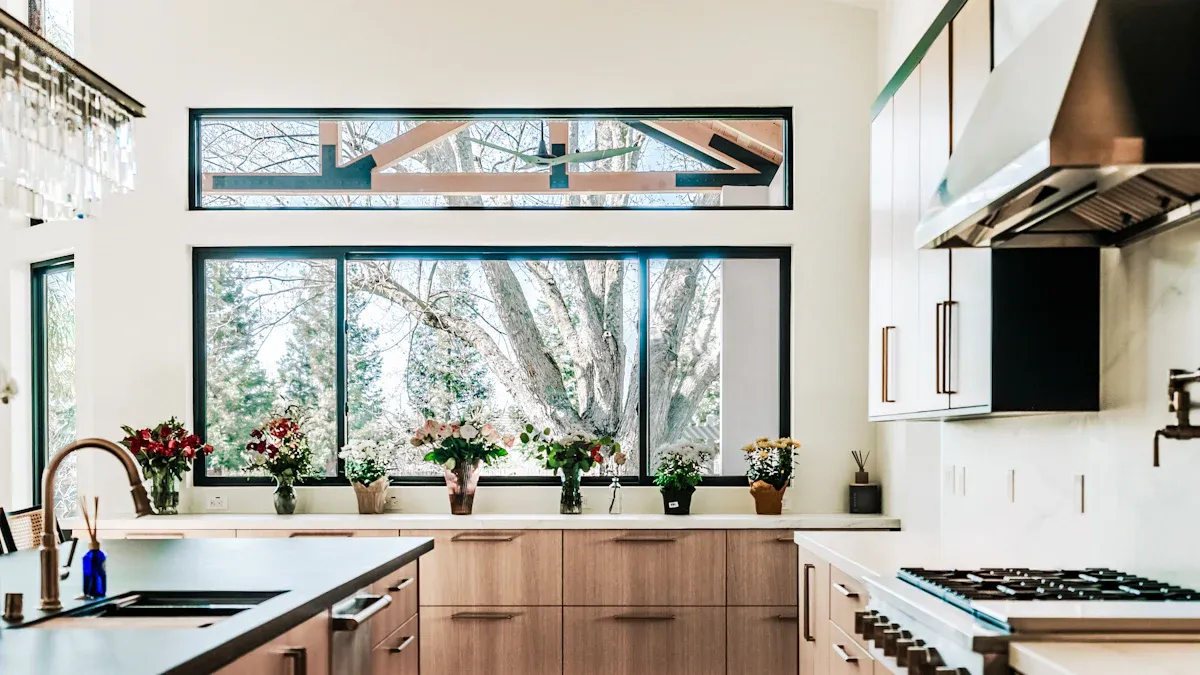
Customizing pine kitchen cabinets lets homeowners express their personal style and meet unique storage needs. Many people choose custom kitchen cabinets because they fit perfectly, eliminate awkward gaps, and allow for finishes that match individual tastes. Homeowner surveys show that custom cabinets boost home value, improve kitchen functionality, and create lasting beauty.
- Cabinets can include innovative storage, like pull-outs and hidden compartments.
- They offer durability and craftsmanship for long-term use.
Homes with custom cabinetry often sell faster and may see a value increase of up to 10%.
Key Takeaways
- Customizing pine cabinets allows you to express your style and improve kitchen functionality.
- Pine cabinets are affordable, eco-friendly, and can increase your home’s value by up to 10%.
- Accurate measurements and planning are crucial for a successful cabinet installation.
- Choosing the right finishes and hardware enhances both the beauty and durability of your cabinets.
- Regular maintenance, like gentle cleaning and protective finishes, helps pine cabinets last for decades.
Understanding Pine Kitchen Cabinets
Features of Pine Cabinets
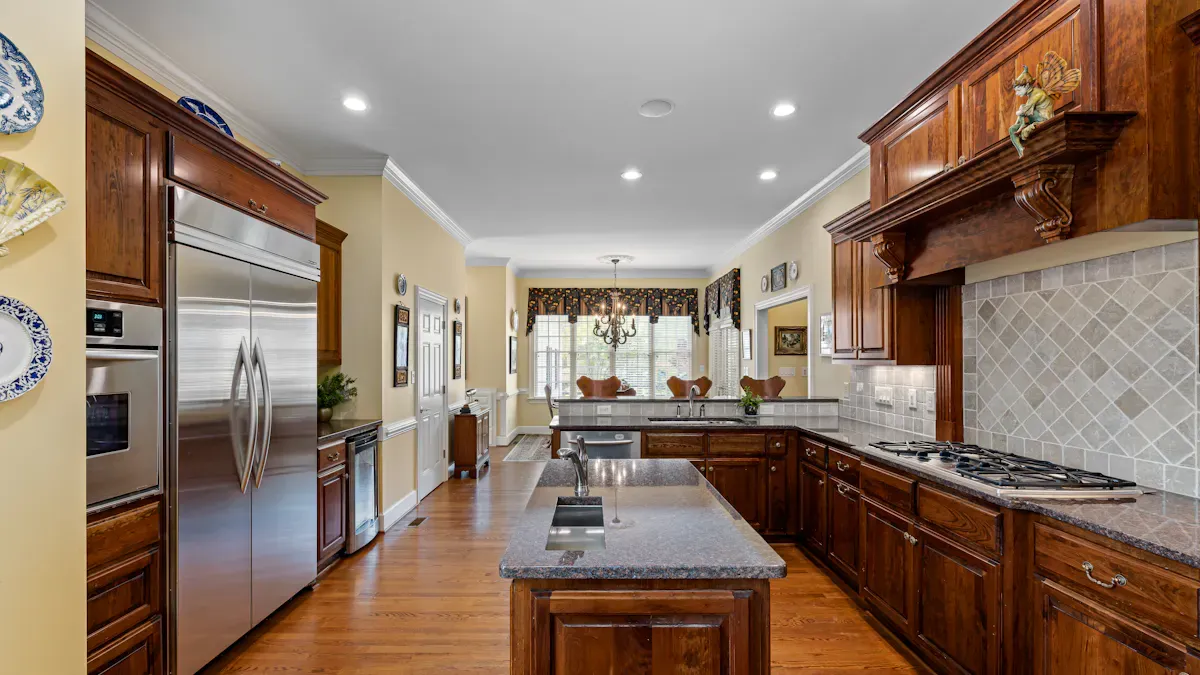
Pine is a soft, affordable wood with a rustic charm due to visible knots, making it suitable for various kitchen styles. Modern trends pair knotty pine with sleek hardware or bold paint for an updated look.
Here is a comparison of pine cabinets with other wood cabinets:
| Characteristic | Pine Cabinets | Other Wood Types |
|---|---|---|
| Wood Type | Softwood | Hardwood/Softwood |
| Aesthetic | Pale yellow, often with knots | Varies widely |
| Durability | Less durable, prone to damage | More durable |
| Cost | Affordable | Often more expensive |
| Staining | Absorbs stains well | Varies |
| Common Use | Country, rustic, modernized | Various styles |
Pros and Cons of Pine
Advantages: soft, easy to work with, adds warmth, moisture-resistant.
Disadvantages: prone to dents, requires maintenance over time.
| Advantages | Disadvantages |
|---|---|
| Soft and easy to work with | Prone to dents and scratches |
| Smooth texture and soft-amber color | Needs more maintenance over time |
| Moisture resistant | Less durable than harder woods |
Tip: Pine cabinets may need extra coats of paint or stain to cover knots and prevent bleed-through.
Why Choose Pine for Customization
Many people choose kitchen cabinets made from pine because of the balance between cost and quality. Pine is one of the most affordable materials for kitchen remodel projects. Knotty pine plywood offers a cost-effective option for custom cabinets, especially for large renovations. Pine is also eco-friendly. Responsible forestry practices make pine a renewable resource, and solid wood cabinets have a lower environmental impact than synthetic materials. Pine absorbs stains well, so you can easily match your cabinets to your kitchen’s style. This flexibility makes pine a smart choice for anyone planning a remodel or renovation.
Are Pine Kitchen Cabinets Worth It in 2026?
Pine kitchen cabinets are ideal for homeowners seeking a balance of affordability, style, and customization flexibility. They work well in country, rustic, and modern kitchens. If you want durable, eco-friendly, and customizable cabinets that add warmth to your space, pine is worth considering. However, if your priority is extreme durability or heavy-use commercial kitchens, harder woods like maple or oak may be better.
Planning Custom Kitchen Cabinets
Assessing Needs and Space
Planning your custom kitchen cabinets starts with understanding how you use your kitchen every day. Think about your cooking habits, the number of people in your home, and the types of items you need to store. Make a list of must-have features, such as pull-out shelves, lazy Susans, or deep drawers for pots and pans. Consider the kitchen workflow. Place cabinets near appliances for easy access. Good storage solutions help keep your kitchen organized and efficient. A personalized design can blend style with function, making your space unique.
Tip: Write down your top priorities before you choose kitchen cabinets. This helps you focus on what matters most.
Measuring for Cabinets
Accurate measurements are key for kitchen cabinet customization. Use a tape measure to record the length and height of each wall. Include windows, doors, and the location of appliances. Mark electrical outlets and plumbing fixtures. Sketch a simple floor plan to help visualize where each cabinet will go. If you are working with a cabinet designer, share these details to ensure a perfect fit. Careful measuring prevents costly mistakes and wasted materials.
Budgeting for Customization
Set a realistic budget for your custom kitchen design. Include the cost of cabinets, hardware, installation, and any changes to your kitchen layout. Materials affect price. Solid wood offers durability and a classic look, while plywood provides stability and moisture resistance. Softwoods like pine are affordable but need more care. The table below compares common cabinet materials:
| Material Type | Pros | Cons |
|---|---|---|
| Hardwoods | Durable, strong, resist damage | Expensive, heavy |
| Softwoods | Affordable, lightweight, rustic | Prone to dents, need care |
Decide if you want to do the work yourself or hire a professional. DIY projects can save money, but working with a cabinet designer ensures expert advice and quality results. Careful planning helps you get the most value from your kitchen cabinets.
Custom Made Cabinets: Styles & Finishes
Popular Styles for Pine Cabinets
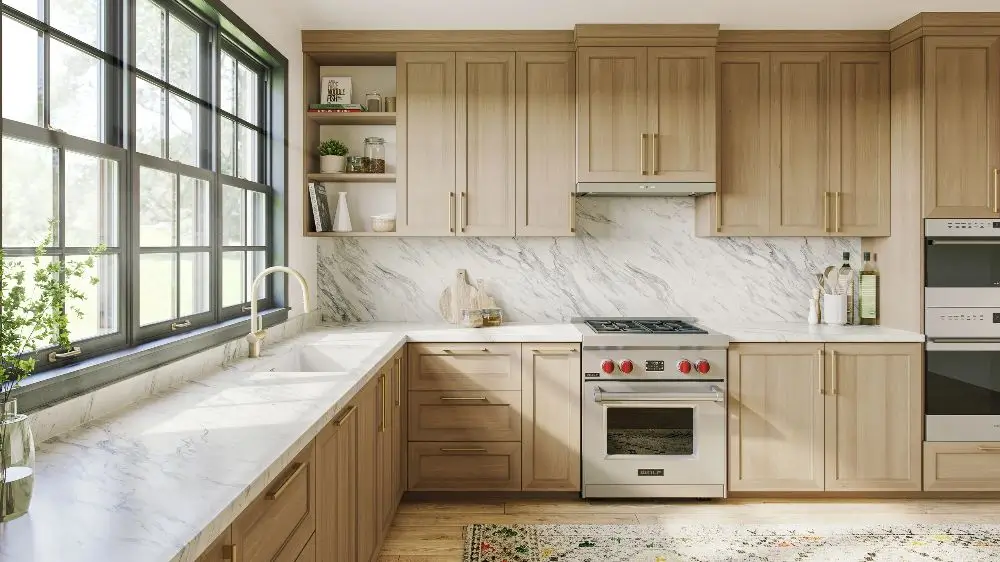
Custom made cabinets allow homeowners to select styles that match their vision for a remodel or renovation. Shaker-style doors remain the most popular choice, holding a 58% market share. These doors feature clean lines and a timeless look, making them ideal for both traditional and modern kitchens. Flat-panel, or slab doors, are gaining popularity with a 22% market share. This style offers a sleek, minimalist appearance that fits well in contemporary spaces. Two-tone cabinets are trending, with contrasting colors for upper and lower cabinets. This approach adds visual interest and helps highlight the natural beauty of pine kitchen cabinets.
Current interior design trends favor lighter woods with warm undertones. Pine fits these trends, offering versatility for designing your custom cabinets. Mid-toned woods are also in demand, striking a balance that works for many kitchen styles. Homeowners often choose kitchen cabinets made from pine for its adaptability and ability to complement a wide range of decor.
Finish Options: Paint, Stain, Natural
Selecting the right finish is essential for kitchen cabinet customization. The finish impacts both appearance and durability. Homeowners can choose from several options:
- Painting: Paint provides unlimited color choices and different sheen levels. Semi-gloss paint is recommended for kitchen cabinets because it balances durability and ease of cleaning. Glossy finishes offer maximum durability but require careful preparation, as they highlight imperfections. Matte finishes hide flaws but are not ideal for high-traffic areas due to their tendency to show fingerprints and grease. When painting knotty pine, use an oil-based primer and spot prime knots to prevent bleed-through.
- Staining: Stain enhances the natural beauty of wood. Options include penetrating stains, gel stains, water-based stains, and oil-based stains. Pre-stain conditioners are suggested for soft woods like pine to prevent blotchy results. Darker stains can update rustic looks and add depth to custom made cabinets.
- Glazing: Glaze adds dimension and creates an antique or aged appearance. The process involves cleaning the cabinet surface, applying glaze with a brush, rag, or sponge, and working it into recessed areas. Excess glaze is removed before drying to avoid heavy buildup. Popular glaze colors include brown, gray, black, and white, which can soften dark base colors.
Tip: Always apply a durable topcoat to protect the finish, especially for cabinets that see daily use.
- Distressing: Distressing techniques create a worn, weathered look. Methods include sand-through distressing, dent and ding techniques, dry brushing, and crackle finishing. These approaches add character and highlight craftsmanship in custom made cabinets.
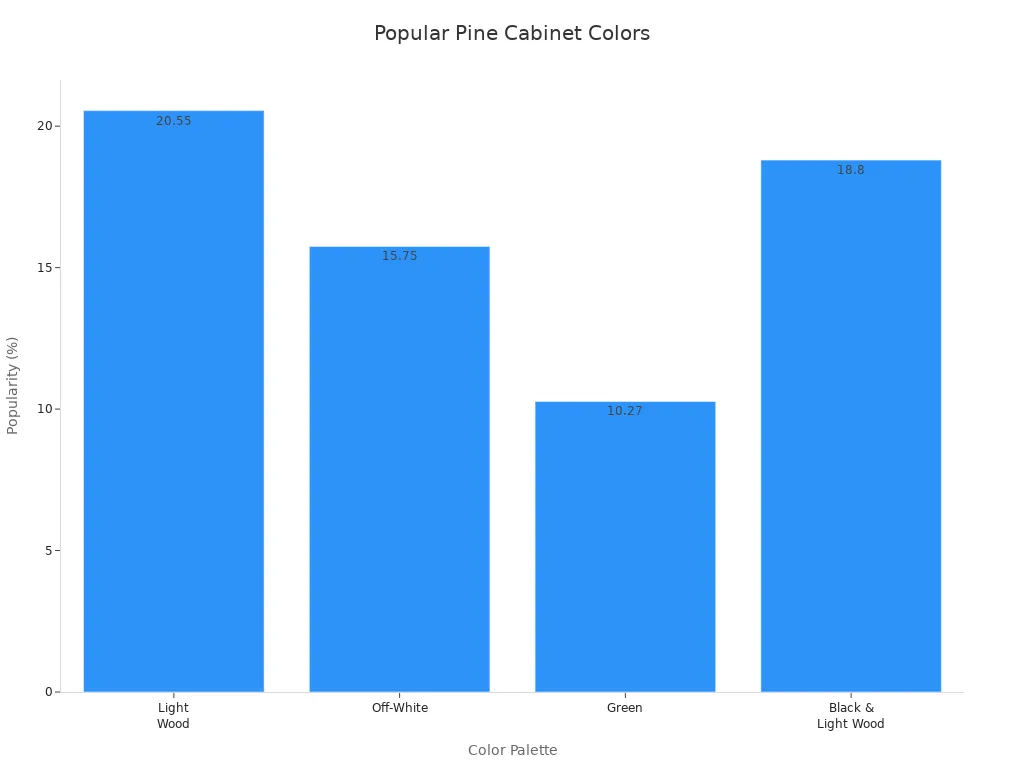
The table below shows the most popular color palettes for pine kitchen cabinets in recent remodel projects:
| Color Palette | Popularity Percentage |
|---|---|
| Light Wood | 20.55% |
| Off-White | 15.75% |
| Green | 10.27% |
| Black & Light Wood | 18.80% |
Modernizing Knotty Pine Cabinets
Modernizing knotty pine cabinets can transform a kitchen during a renovation. Painting offers unlimited color choices and allows homeowners to match any design style. High-quality paints such as acrylic latex, alkyd, or hybrid enamel provide durability. Staining enhances the wood’s natural grain and can shift the look from rustic to contemporary. Using darker stains updates the appearance and adds sophistication.
Cabinet glaze is a translucent coating applied over painted or stained cabinet surfaces. The process involves cleaning the cabinet surface thoroughly, applying the glaze using a brush, rag, or sponge, and working it into recessed areas and panel details. Excess glaze is removed before it dries completely to prevent heavy buildup and maintain the desired look. Popular glaze colors include brown, gray, and black for natural aging effects, while white glaze softens dark base colors.
Pairing knotty pine cabinets with new paint or a modern backsplash creates a refreshed design. Homeowners often select subway tile or bold geometric patterns for backsplashes. These choices complement the warmth of pine and help achieve a cohesive look in a remodel or renovation. Quality materials and careful craftsmanship ensure that custom made cabinets stand out and last for years.
Note: When designing your custom cabinets, consider how the finish and material will interact with other elements in the kitchen. This approach helps achieve a balanced and attractive result.
Hardware & Accessories for Kitchen Cabinets
Types of Cabinet Hardware
Cabinet hardware includes handles, knobs, pulls, and hinges. These small parts play a big role in both the look and function of kitchen cabinets. Handles and pulls make it easy to open doors and drawers. Knobs add a classic touch, while bar pulls give a modern feel. Soft-close hinges help prevent slamming, which protects the cabinets and keeps them quiet. Choosing the right hardware can improve the daily use of your kitchen and add to the overall style.
Tip: High-quality hardware lasts longer and keeps cabinets working smoothly.
Choosing Hardware Finishes
The finish of cabinet hardware changes the look of pine kitchen cabinets. Matte black and gunmetal bronze create bold contrast with lighter wood, making the cabinets stand out. Polished nickel and chrome finishes add brightness and reflect light, which works well in smaller kitchens. Mixing bronze hardware with stainless steel appliances balances warm and cool tones, giving the space a modern touch. Each finish can highlight or soften the natural beauty of pine, depending on how it matches the cabinets and other kitchen features. It is important to select a finish that fits your style and the overall design.
Functional Accessories
Adding accessories to kitchen cabinets increases their usefulness. Many homeowners choose pull-out shelves for easy access to items in deep cabinets. Corner cabinet solutions, such as lazy Susans and multi-tier pull-outs, make use of hard-to-reach spaces. Adjustable shelving lets you change the height to fit different items. Built-in organizers, like spice racks and cutlery trays, help keep everything in order. Vertical storage options use the full height of cabinets, making the most of every inch. These accessories improve kitchen organization and support a high level of quality in daily use.
Note: Well-chosen hardware and accessories can turn basic cabinets into a custom, high-quality feature in your kitchen.
Kitchen Cabinets Design & Layout
Storage Solutions
Effective storage solutions help maximize space in pine cabinets during a remodel or renovation. Adjustable shelves allow homeowners to customize the height for different items, making use of vertical space. Pull-out shelves provide easy access to larger items like pots and pans, reducing clutter and improving organization. The inside of cabinet doors can be used for additional storage, such as spice racks or hooks for utensils. These strategies support optimal storage and make daily kitchen tasks easier.
- Adjustable shelves for flexible storage
- Pull-out shelves for pots and pans
- Spice racks or hooks on cabinet doors
Tip: Smart storage solutions increase the value of custom kitchen design and make cabinets more functional.
Workflow & Integration
A well-planned kitchen layout improves workflow and supports seamless integration of appliances and cabinets. Planning ahead is essential. The entire kitchen layout, including electrical and plumbing, must be designed around the appliances chosen for the remodel or renovation. Investing in quality panel-ready appliances from brands like Miele, Liebherr, and Sub-Zero ensures reliability and smooth integration with wood cabinets. An appliance garage with a pocket or motorized door hides everyday items, keeping the kitchen tidy. Proper ventilation is critical when concealing cooktops, ovens, or microwaves. Adequate airflow systems protect cabinets and meet safety codes.
Note: Integrated designs require careful planning to achieve a cohesive look and maintain cabinet durability.
Pairing Pine Cabinets with Other Elements
Pairing pine cabinets with other kitchen elements creates a unified design during a remodel or renovation. Natural wood cabinets combined with matte black finishes bridge rustic warmth and contemporary style. This pairing enhances the inviting feel of the kitchen and adds a modern edge. Integrating pine cabinets with wood counters or backsplashes produces a cohesive look. Homeowners often select subway tile or geometric patterns for backsplashes, which complement the grain of pine cabinets. Thoughtful combinations of materials and finishes help achieve a balanced custom kitchen design.
Callout: Integrating pine cabinets with wood counters or backsplashes is a proven way to create harmony in a kitchen remodel.
Customization Process for Cabinets
DIY vs. Professional
Homeowners often face a choice between handling kitchen cabinet customization themselves or hiring professionals. Each approach offers unique benefits and challenges. The decision can affect the outcome, cost, and overall satisfaction with the remodel or renovation.
| Aspect | DIY Kitchen Cabinets | Custom Kitchen Cabinets |
|---|---|---|
| Cost | Generally lower due to self-installation | Higher due to professional labor and materials |
| Control over Budget | Full control, can choose cheaper materials | Limited control, often more expensive materials |
| Quality of Materials | Varies based on personal choice | High-quality, professional-grade materials |
| Time Investment | Flexible, can work at your own pace | Time-consuming, built to order |
| Expertise Required | Requires skill and tools | Professional expertise ensures quality |
| Personal Satisfaction | High, due to personal involvement | Lower, as execution is handled by professionals |
| Home Value Increase | Minimal, unless done exceptionally well | Significant, perceived as premium |
- DIY kitchen cabinet customization gives full control over budget and materials. Many enjoy the satisfaction of creating something personal. This approach allows for experimentation without a large investment. However, it demands time, skill, and the right tools.
- Professional custom kitchen design delivers tailored perfection. Experts use high-quality materials and advanced techniques. The result often increases home value and ensures a premium finish. This option costs more and takes longer due to the detailed installation process.
Tip: Consider your skill level, available time, and desired outcome before choosing between DIY and professional customization for your remodel or renovation.
Preparing Cabinets for Customization
Preparation is the foundation of a successful kitchen cabinet customization project. Whether updating existing cabinets or building from scratch with knotty pine plywood, following a systematic approach ensures quality results.
- Set clear goals for the remodel or renovation. Identify which areas of the cabinets need attention, such as doors, drawers, or hardware.
- Organize all tools and materials before starting. This step streamlines the workflow and prevents delays.
- Schedule the project to allow enough time for each stage, including drying finishes and assembling components.
- Evaluate the current condition of the cabinets. Inspect for damage, loose joints, or worn surfaces. Address these issues before moving forward.
- Clean all surfaces thoroughly. Remove grease, dust, and old finishes to create a smooth base for new paint or stain.
- Sand the wood to open the grain and ensure even absorption of finishes. Pay special attention to knotty pine, as it can absorb stain unevenly.
- Apply a pre-stain conditioner if staining pine. This step helps prevent blotchy results and enhances the final appearance.
- Remove or label hardware for easy reinstallation after finishing.
- Protect surrounding areas with drop cloths or painter’s tape to avoid accidental spills or splatters.
Note: Careful preparation supports a high level of quality and craftsmanship in every remodel or renovation.
Installation & Finishing Tips
The installation process for custom pine cabinets requires attention to detail and proper technique. Whether assembling cabinets from knotty pine plywood or updating existing units, best practices help achieve a professional look and long-lasting durability.
- Select premium wood with minimal imperfections for building from scratch. This choice ensures a smoother finish and highlights the natural beauty of pine.
- Understand that pine and fir absorb stain unevenly. Always use a pre-stain conditioner and test finishes on scrap pieces before applying to cabinets.
- Use high-quality fasteners and joinery methods, such as pocket screws or dowels, for strong assembly. Proper alignment during installation prevents gaps and ensures doors and drawers operate smoothly.
- Apply finishes in a dust-free environment. The natural color and grain of pine influence how paint or stain appears, so choose products that enhance these features.
- Always use a durable topcoat, such as polyurethane or a product with UV protection. This layer shields cabinets from daily wear and sunlight, preserving the finish over time.
- Choose a low-maintenance finish like semi-gloss or satin. These options make cleaning easier and keep cabinets looking fresh.
- Install hardware carefully, aligning handles and pulls for a balanced appearance. Soft-close hinges add a touch of quality and protect the cabinets from damage.
Common mistakes to avoid:
- Prioritizing convenience over quality, which can reduce durability.
- Over-personalizing design choices, making the kitchen less appealing to future buyers.
- Neglecting storage needs, leading to clutter and reduced function.
A successful remodel or renovation depends on careful planning, the right materials, and attention to detail during the installation process. These steps ensure that kitchen cabinet customization delivers both beauty and lasting value.
Maintenance & Care for Pine Cabinets
Cleaning Pine Cabinets
Regular cleaning keeps pine kitchen cabinets looking their best and helps preserve the finish. Dusting with a soft cloth removes everyday dirt. For deeper cleaning, use a mild soap solution and a damp cloth. Always dry the surface right away to prevent water spots. Avoid abrasive cleaners or scrub brushes, as these can scratch the finish and damage the wood. For stubborn stains, a specialized wood cleaner works well. Many homeowners use products like Liquid Gold to clean and enhance the natural grain of the material.
Recommended cleaning routine:
- Wipe down cabinet surfaces daily with a soft, damp cloth.
- Use a mild soap solution for tougher stains, then dry thoroughly.
- Apply a wood cleaner as needed, following the manufacturer’s instructions.
Tip: Gentle cleaning protects the finish and highlights the craftsmanship of your cabinets.
Protecting the Finish
A strong finish shields pine cabinets from daily wear and tear. Clear wood sealer prevents the wood from absorbing too much stain or finish, which helps maintain a professional appearance. Clear lacquer adds a hard, durable film that guards against water, stains, and scratches. These protective layers make the cabinets easier to clean and keep their natural beauty over time.
Environmental factors also matter. Keep the kitchen at a steady temperature of 68 to 70 degrees and maintain humidity around 40%. This helps prevent warping and finish problems.
| Parameter | Recommended Value |
|---|---|
| Temperature | 68 to 70 degrees |
| Humidity Level | 40% |
Note: Proper protection and care can help pine kitchen cabinets last up to 50 years.
Fixing Common Issues
Pine is a soft wood, so dents and scratches can happen with regular use. Screws may strip out, and knots in the wood can bleed through the finish if not sealed. To fix dents, use a damp cloth and a warm iron to raise the wood fibers. For scratches, apply a matching wood filler or touch-up marker. If screws become loose, replace them with longer ones for a secure fit. Before painting, seal knots with a shellac primer to prevent bleed-through and keep the finish smooth.
Common issues and solutions:
- Dents and scratches: Repair with wood filler or steam out dents.
- Stripped screws: Use longer screws for better hold.
- Knot bleed-through: Seal knots before applying the finish.
Callout: Regular maintenance and quick repairs keep your cabinets looking new and protect your investment in quality material and craftsmanship.
| Type of Cabinet | Average Lifespan |
|---|---|
| Kitchen cabinets | 50 years |
Customizing pine kitchen cabinets involves planning, measuring, selecting finishes, and choosing hardware. Homeowners can choose kitchen cabinets that fit their needs and style. Well-maintained cabinets add value and beauty to any home. Both DIY and professional options offer great results. For more inspiration, explore these resources:
- Houzz’s Kitchen Ideas gallery
- Homes & Gardens’ article on kitchen trends for 2025
- Custom kitchen remodel projects in Annapolis, Maryland, and Short Hills, NJ
FAQ
What makes pine a good choice for kitchen cabinets?
Pine offers affordability, a warm look, and easy customization. Many homeowners like its natural knots and grain. Pine works well for both rustic and modern kitchens. It also absorbs stains and paint easily.
How do I prevent knots from showing through paint on pine cabinets?
Use a shellac-based primer to seal knots before painting. This step blocks resin and prevents yellow stains. Spot-prime each knot, then apply a full coat of primer for best results.
Can I install pine cabinets myself?
Yes, many DIYers install pine cabinets. Pine is soft and easy to cut. Accurate measuring and careful assembly are important. Beginners should follow instructions and use quality tools for safety.
How often should I clean and maintain pine cabinets?
Wipe cabinets weekly with a soft, damp cloth. Use mild soap for stains. Apply wood cleaner like Liquid Gold monthly. Check for scratches or loose hardware every few months.
What hardware styles look best with pine cabinets?
| Style | Effect |
|---|---|
| Matte Black | Modern contrast |
| Brushed Nickel | Subtle shine |
| Bronze | Warm, classic look |
Choose hardware that matches your kitchen’s style and color palette.