
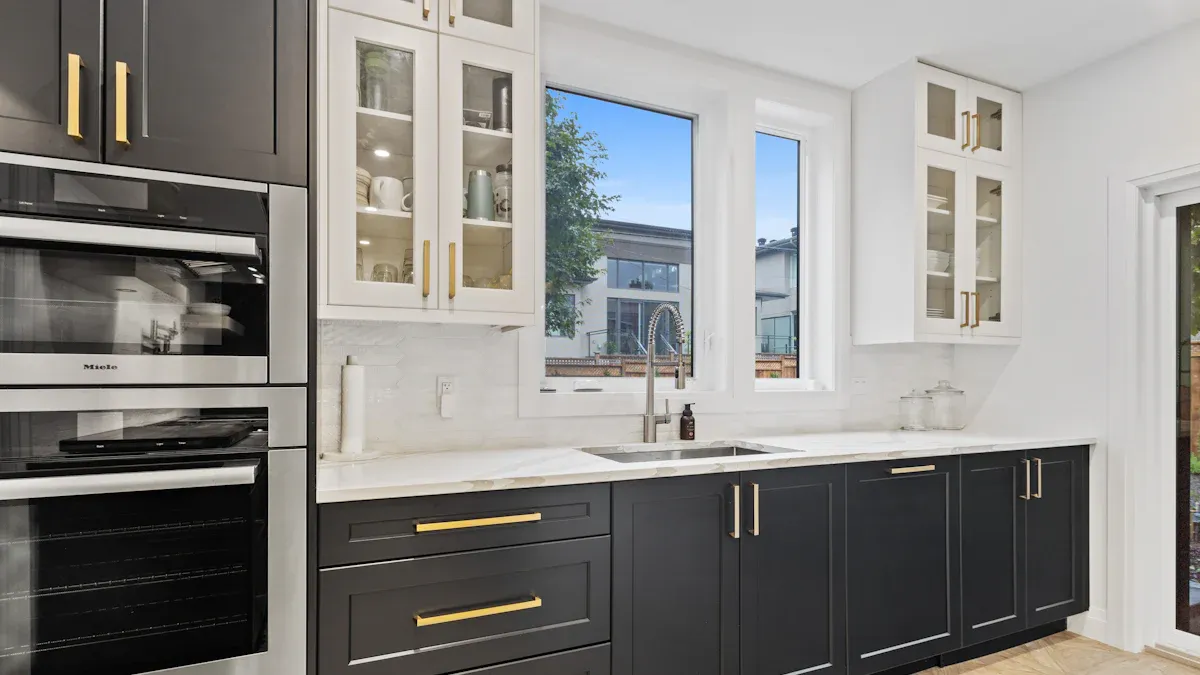
- The standard depth for base kitchen cabinets in the U.S. is 24 inches.
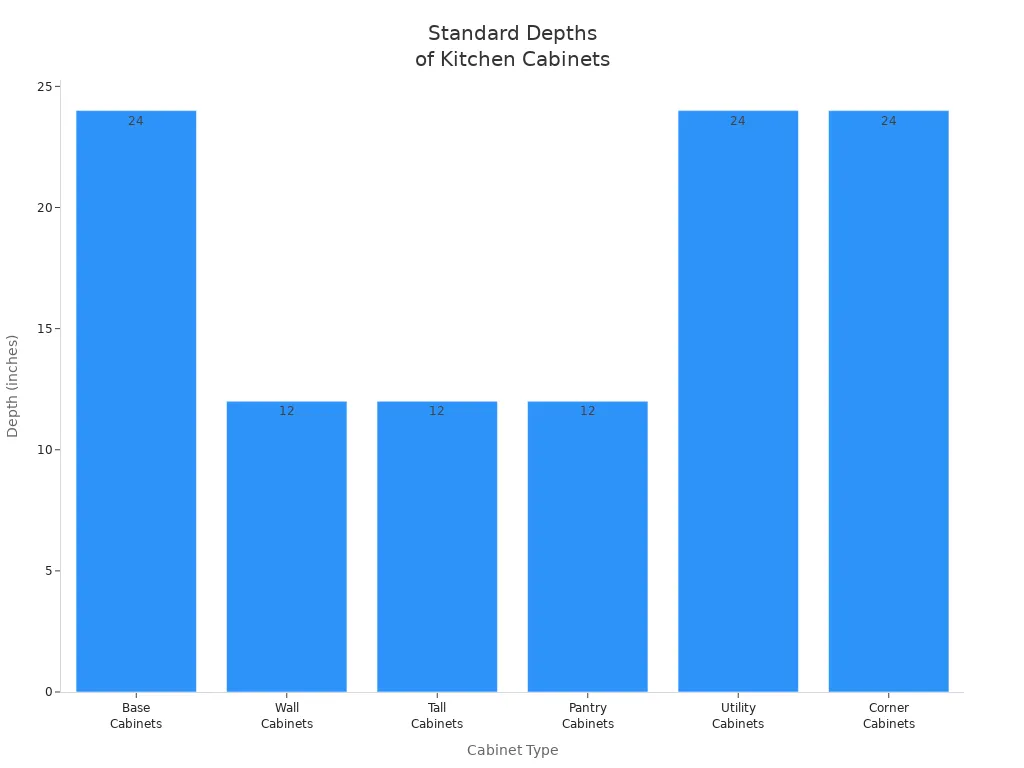
- Wall cabinets often measure 12 inches deep, while tall or pantry cabinets typically match the base cabinet depth.
Kitchen cabinet depth affects how much you can store and how easily you move around the kitchen. Choosing the right depth helps maximize storage and keeps your kitchen functional.
Key Takeaways
- Standard base cabinet depth is 24 inches, providing essential storage for pots and appliances.
- Shallow cabinets, typically 12 to 18 inches deep, improve accessibility and movement in smaller kitchens.
- Choosing the right cabinet depth enhances kitchen flow and prevents clutter, making daily tasks easier.
- Customizing cabinet dimensions can maximize space and improve organization, especially in unique layouts.
- Always measure your kitchen and consider appliance sizes before selecting cabinet depths for optimal functionality.
Kitchen Cabinet Depth Overview
What Is Kitchen Cabinet Depth?
Kitchen cabinet depth describes the distance from the front of the cabinet box to the wall. This measurement does not include the cabinet door. It is a key factor in how much floor space the cabinets use and how much storage they provide. Manufacturers follow industry standards to ensure cabinets fit most kitchens and appliances.
Note: Cabinet depth affects how much you can store and how easily you reach items inside.
Here is a table showing standard cabinet dimensions:
| Cabinet Type | Height Options (inches) | Depth Options (inches) | Width Options (inches) |
|---|---|---|---|
| Base Cabinets | 34.5 (without countertop), 36 (with countertop) | 12 to 24 | 9 to 42 |
| Wall Cabinets | 30, 36, 42 | 12 to 24 | 9 to 36 |
| Tall Cabinets | 84, 90, 96 | 12 or 24 | 12, 24, 36 |
Another table shows how depth relates to cabinet function:
| Cabinet Type | Standard Depth (Box Only) | Depth with Countertop | Primary Function |
|---|---|---|---|
| Base Cabinets | 24 inches | 25 – 25.5 inches | Main workspace, heavy storage, appliance housing |
| Wall Cabinets | 12 inches | N/A | Eye-level storage, glassware, food items |
| Tall/Pantry | 12, 18, or 24 inches | N/A | Bulk storage, utility, broom closets |
Why Depth Matters
Discuss the relationship between cabinet depth and overall kitchen ergonomics.
The depth of kitchen cabinets influences how comfortable and efficient your kitchen feels. Cabinets that are too deep can make it hard to reach items at the back. Shallow cabinets may not hold enough, leading to clutter. The right kitchen cabinet depth helps you access items easily and keeps your kitchen organized.
- Proper cabinet depth ensures storage needs are met without wasting space.
- It enhances accessibility and supports a cohesive kitchen design.
- It prevents discomfort and improves kitchen flow.
Recent trends show more homeowners choosing shallow cabinets, especially in smaller kitchens. These cabinets, often 12 to 18 inches deep, improve movement and make it easier to reach items. Shallow cabinets also help kitchens with narrow aisles feel more open.
Cabinet depth affects appliance fitting and countertop space. Standard depths allow for seamless integration of appliances and keep countertops clear. Choosing the right depth makes daily tasks easier and reduces strain.
Standard Kitchen Cabinet Depths
Base Cabinet Dimensions
Base cabinets form the foundation of most kitchen layouts. The standard base cabinet depth is 24 inches. This measurement refers to the cabinet box only. When a countertop is added, the depth increases to about 25 to 25.5 inches. These cabinets provide the main workspace and store heavy items like pots, pans, and small appliances.
| Cabinet Type | Standard Depth (Box Only) | Depth with Countertop | Primary Function |
|---|---|---|---|
| Base Cabinets | 24 inches | 25 – 25.5 inches | Main workspace, heavy storage, appliance housing |
Base cabinet depth plays a key role in how much you can store and how your kitchen functions. Deeper cabinets allow for more storage but can make it harder to reach items at the back. Shallower base cabinet depths, such as 18 inches, are sometimes used in narrow kitchens to improve movement and accessibility. Many homeowners choose to adjust base cabinet depth to fit their kitchen layout or to accommodate specific appliances.
Wall Cabinet Dimensions
Wall cabinets hang above the countertop and provide storage for dishes, glasses, and food items. The standard wall cabinet depth is 12 inches. This depth makes it easy to reach items without leaning too far over the counter. Wall cabinets are not as deep as base cabinets, which helps keep the kitchen feeling open and prevents head bumps.
| Cabinet Type | Depth Measurement |
|---|---|
| Wall Cabinets | 12 inches |
| Base Cabinets | 24 inches |
Some kitchens use wall cabinets with a depth of up to 24 inches, especially when extra storage is needed. However, most kitchens stick to the standard wall cabinet depth to maintain comfort and accessibility.
Tall and Pantry Cabinet Dimensions
Tall cabinets, also called pantry cabinets, offer vertical storage from floor to ceiling. The standard depths for these cabinets are 12 or 24 inches. A 12-inch tall cabinet depth works well for storing canned goods and small items. A 24-inch depth provides space for larger objects, deep baskets, or small appliances.
| Cabinet Type | Standard Depth | Impact on Storage Capacity |
|---|---|---|
| Tall Cabinets | 12 or 24 inches | Ideal for large bulk objects, small appliances, or deep baskets. |
| Accessibility Issue | Items can be lost in the back, requiring specialized hardware. |
- Tall cabinets usually stand between 84 and 96 inches high.
- Standard depths of 12 or 24 inches help maximize storage without creating horizontal clutter.
Choosing the right tall cabinet depth depends on what you plan to store. Deeper cabinets hold more but may require pull-out shelves or organizers to prevent items from getting lost.
Common Variations
Not every kitchen uses only standard kitchen cabinet depths. Variations exist to meet different needs and layouts. The table below shows some common variations in kitchen cabinet dimensions:
| Cabinet Type | Standard Depths (inches) | Variations (inches) |
|---|---|---|
| Base Cabinets | 24 | 18, 30 |
| Wall Cabinets | 12 | 24 |
| Tall Cabinets | 12, 24, 36 | Up to 96 |
| Pantry Cabinets | 12 | 12-24 |
| Utility Cabinets | 24 | N/A |
| Corner Cabinets | 24 | N/A |
Several factors influence these variations:
- Kitchen layout
- Appliance sizes
- User needs
- Storage requirements
- Aesthetic preferences
Homeowners often select non-standard cabinet depths to maximize space, especially in small or narrow kitchens. Semi-custom cabinets allow adjustments in 1-inch increments. For example, reducing base cabinet depth from 24 inches to 18 inches can make a galley kitchen feel more open.
Tip: Always measure your space and consider how you use your kitchen before choosing cabinet depths. Customizing kitchen cabinet dimensions can improve both storage and comfort.
Standard kitchen cabinet depths provide a starting point for most designs. However, understanding the options and reasons for variations helps you create a kitchen that fits your needs.
Impact of Cabinet Depth on Space and Storage

Storage Capacity
Cabinet depth plays a major role in how much you can store and how organized your kitchen stays. Deeper cabinets offer more space for large pots, appliances, and bulk items. However, they can make it harder to reach things at the back. Shallower cabinets help keep items within easy reach, reducing clutter and improving organization. Drawers with full-extension runners allow you to access everything inside, even in deeper cabinets. Movable dividers in drawers help keep utensils and tools sorted. Cabinets with fixed shelves may support heavier items, but retrieving objects from the back can be difficult.
- Deeper cabinets increase storage but may lead to disorganization.
- Drawers improve accessibility and organization.
- Cabinets provide support for heavy items but limit access.
Kitchen Flow and Accessibility
The depth of your cabinets affects how you move around the kitchen. In smaller kitchens, reducing cabinet depth to 18 or 21 inches helps maintain safe walkways between 36 and 42 inches wide. This makes it easier to work and prevents accidents. For wheelchair users, a depth of 19 inches under counters allows better access. Standard cabinet dimensions assume users between 5’6″ and 5’10” tall. Deeper cabinets can complicate access for shorter users, making it harder to reach items.
| Cabinet Depth | Impact on Traffic Flow and Accessibility |
|---|---|
| 21-18 inches | Necessary in small kitchens to maintain safe walkways of 36-42 inches. |
| 19 inches | Required depth for wheelchair access under counters. |
| 34 inches | Maximum height for ADA-compliant kitchen counters. |
| 5’6″ to 5’10” | Standard dimensions assume users within this height range. |
| Deeper cabinets | Increase storage but complicate access for shorter users. |
Appliance and Countertop Integration
Choosing the right kitchen cabinet depth ensures appliances fit properly and countertops function well. Standard dishwashers require a cabinet depth of 24 inches. Refrigerators often need 30 to 36 inches, but counter-depth models fit into 24 to 25 inches. In narrow kitchens, standard countertop depth can crowd walkways and reduce safety. Deeper countertops provide more prep space for cutting boards and appliances. For wheelchair users, standard depth may be too deep, making food preparation difficult. Wall cabinet depth also affects how much space you have above the counter, influencing both storage and accessibility.
| Appliance | Recommended Depths |
|---|---|
| Refrigerators | 30 to 36 inches (standard) |
| 24 to 25 inches (counter-depth) | |
| Dishwashers | 24 inches |
Tip: Always consider how cabinet depth will affect appliance placement and countertop usability before making final decisions.
Customizing Kitchen Cabinet Dimensions

Unique Layouts and Small Spaces
Not every kitchen fits the standard cabinet sizes. Homes with unique layouts or limited space often need custom solutions. Custom cabinet depths can help maximize every inch and improve organization. Reducing cabinet depth from 24 inches to 21 or 18 inches can protect walkways in narrow kitchens. Slim profile cabinets also make it easier to see and reach stored items.
Here are some smart solutions for small or irregular kitchens:
| Solution Type | Description |
|---|---|
| Hidden Storage Opportunities | Toe-kick drawers and inside cabinet door storage add space without taking up extra room. |
| Compact Appliance Solutions | 24-inch appliances and counter-depth refrigerators save space and keep the kitchen functional. |
| Efficient Layout Strategies | Galley kitchen optimization and vertical stacking of appliances improve workflow. |
- Tall cabinets reach the ceiling to use vertical space.
- Corner cabinets with lazy Susans or swing-out trays make corners useful.
- Slim pull-out cabinets fit in narrow gaps for spices or cleaning supplies.
- Slide-out storage and pull-down shelves improve access in tight spots.
Custom depth cabinets help eliminate wasted space and create a seamless design flow. They also allow homeowners to tailor storage to their specific needs.
Accessibility Needs
Accessibility is important for many families. Customizing cabinet dimensions can make the kitchen safer and more comfortable for everyone, including wheelchair users. Lowering cabinet height to 32.5 inches aligns with ADA guidelines. Open space beneath the sink provides knee clearance. Integrated protective panels and enhanced customization options add safety and convenience.
| Aspect | Recommendation |
|---|---|
| Toe Kick Modification | Higher (9-inch) and deeper (6-inch) toe kick for wheelchair access. |
| Work Surface Depth | 30-inch depth for better reach, if user can reach. |
| Wall Cabinet Height | Lower cabinets or pull-down shelves for easier access. |
- Open space under counters improves access.
- Reduced cabinet height makes work surfaces easier to reach.
- Pull-down shelves in wall cabinets help everyone reach stored items.
Planning for Appliances
Planning for appliances is a key step in designing custom cabinets. Choose appliances early in the process. This helps set the layout and cabinet requirements. Measure the space for each appliance, including height, width, and depth. Check installation dimensions, electrical needs, and venting specifications.
Adding 3/4″ for door fronts and about 1/8″ as a bumper between the door and cabinet case brings the total depth to 24 7/8″. A 1/4″ countertop overhang is recommended for a total depth of at least 25 1/8″.
Follow these steps for accurate planning:
- Measure the space for cabinets and appliances.
- Decide what each cabinet will store.
- Select materials and finishes for durability.
- Design the layout and cabinet style.
- Build for strength and long-term use.
- Match the cabinet style to the rest of the kitchen.
- Draw the plan or use design software.
- Make sure installation will be easy.
Customizing cabinet depth ensures the ideal kitchen cabinets dimensions for your space and needs. Careful planning helps avoid gaps, improves function, and creates a kitchen that works for everyone.
Understanding standard kitchen cabinet depths helps create an efficient kitchen. The table below shows how each cabinet type supports storage and workflow:
| Cabinet Type | Standard Depth | Purpose |
|---|---|---|
| Base Cabinets | 24 inches | Supports countertops and appliances for efficient workflow. |
| Wall Cabinets | 12 inches | Allows easy access to items without overcrowding countertops. |
| Tall Cabinets | 24 inches | Provides ample storage for pantry items and cleaning supplies. |
Mistakes like appliance mismatch, cramped walkways, and ignoring countertop overhang can disrupt kitchen function. Consulting cabinet experts ensures cabinets fit your needs and improve long-term satisfaction. Consider your space, storage goals, and seek professional advice before choosing or customizing cabinet depth.
FAQ
What is the standard depth for kitchen base cabinets?
The standard depth for kitchen base cabinets is 24 inches. This size fits most appliances and provides enough storage for pots, pans, and utensils.
Can I customize cabinet depth for a small kitchen?
Yes, you can customize cabinet depth. Many homeowners choose 18 or 21 inches for narrow kitchens. Custom sizes help maximize space and improve accessibility.
How does cabinet depth affect appliance installation?
Cabinet depth must match appliance requirements. For example, dishwashers need 24 inches. Counter-depth refrigerators fit into 24 to 25 inches. Always check appliance specifications before choosing cabinet depth.
Are deeper cabinets better for storage?
Deeper cabinets hold more items, but they can make it hard to reach things at the back. Drawers and pull-out shelves help improve access and organization.
What is the best cabinet depth for accessibility?
A depth of 19 inches under counters allows wheelchair access. Lower cabinet heights and pull-down shelves also help make kitchens more accessible.