
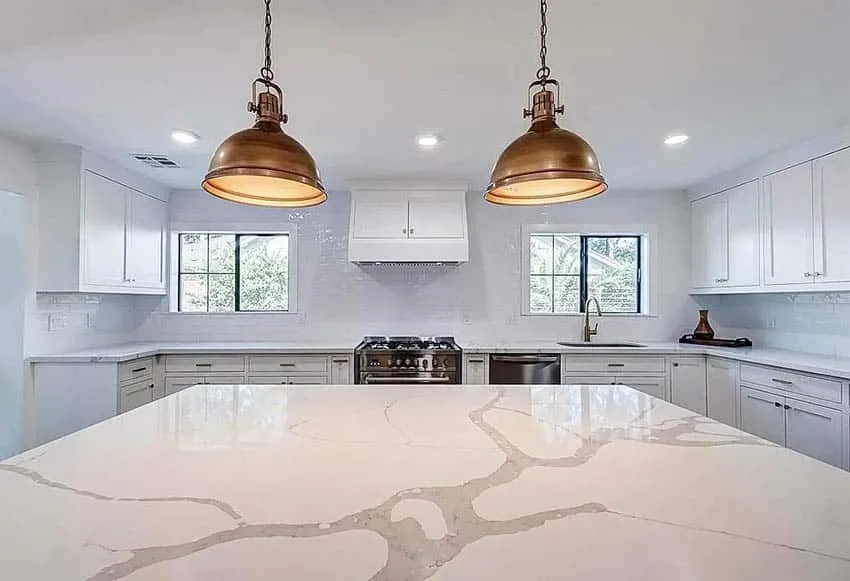
Finding the best Calacatta Gold Quartz for your kitchen demands a close look at several key factors. Homeowners often rate durability, low maintenance, and aesthetic appeal as most important when selecting the right calacatta quartz for their kitchen remodels.
| Criteria | Importance Level |
|---|---|
| Durability | High |
| Low Maintenance | High |
| Aesthetic Appeal | High |
| Customization Options | Medium |
Key Takeaways
- Focus on durability, low maintenance, and aesthetic appeal when choosing Calacatta Gold Quartz for your kitchen.
- Select slabs with even veining and a clean white base to ensure a cohesive and high-quality look.
- Opt for thicker slabs (3cm) for better durability, especially in busy kitchens, and consider jumbo slabs to minimize seams.
- Inspect slabs in natural light to assess true colors and patterns, ensuring they match your design vision.
- Regular cleaning with soap and water keeps Calacatta Gold Quartz looking new, making it a practical choice for any kitchen.
Calacatta Gold Quartz Overview
What Makes Calacatta Gold Quartz Unique
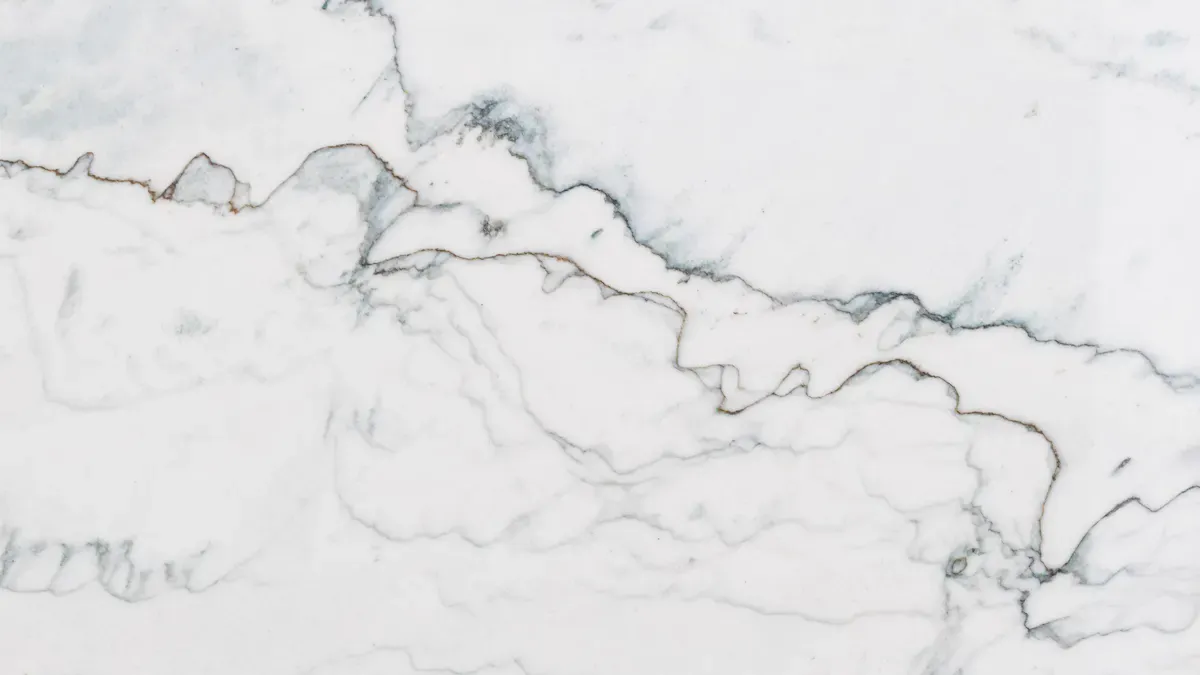
Calacatta gold quartz stands out for its striking veining and luxurious appearance. The surface mimics the look of natural calacatta marble, but with more consistent patterns and colors. Many homeowners choose calacatta quartz because it offers a blend of elegance and practicality. The gold and gray veining on a bright white background creates a bold statement in any kitchen. Calacatta quartz colors range from subtle to dramatic, allowing for a variety of design choices.
Tip: Selecting the right calacatta quartz means looking for slabs with even veining and a clean white base. This ensures the countertop will look cohesive and high quality.
Benefits for Kitchen Remodels
Calacatta gold quartz brings several advantages to kitchen remodels. It is non-porous, which means it resists stains from coffee, wine, and other common kitchen spills. Unlike natural marble, calacatta quartz does not require sealing or special cleaners. Simple soap and water keep the surface looking new. This makes it a great choice for busy families or anyone who wants a low-maintenance kitchen.
- Calacatta gold marble often costs between $100 and $200 per square foot installed.
- Marble needs regular sealing and can stain or etch easily.
- Calacatta gold quartz is more cost-effective, does not need sealing, and resists stains and etching.
- Cleaning calacatta quartz only requires soap and water.
Core Benefits: Durability and Technical Performance
Calacatta gold quartz offers impressive durability and technical performance compared to other countertop materials. The table below highlights key metrics:
| Metric | Calacatta Gold Quartz | Other Countertop Materials |
|---|---|---|
| Non-Porosity | Yes | Varies |
| Stain Resistance | High | Varies |
| Heat Behavior | Heat-tolerant | Varies |
| Hardness | ~Mohs 7 | Varies |
Quartz is also an eco-friendly option. Many calacatta quartz slabs use recycled materials and energy-efficient production methods, which help reduce waste and emissions. This makes calacatta gold quartz a smart and sustainable choice for modern kitchens.
Evaluating Calacatta Gold Quartz Quality
Standard vs. Jumbo Slabs: Minimizing Seams in Large Designs
Choosing the right slab size is important for a seamless kitchen design. Standard slabs work well for most countertops, but large kitchen islands or expansive surfaces benefit from jumbo slabs. Jumbo slabs of calacatta gold quartz reduce the number of seams, creating a smooth, uninterrupted look. This design continuity enhances the beauty of the kitchen and makes cleaning easier. Fewer seams also mean less chance for dirt or moisture to collect, which helps maintain the surface over time. Jumbo slabs can also lower installation costs and speed up the process, making them a practical choice for large projects.
Tip: For kitchens with large islands or long countertops, ask your supplier about jumbo slab options to achieve a sleek, modern appearance.
Veining, Color, and Pattern Consistency
The visual appeal of calacatta quartz depends on the consistency of veining, color, and pattern. Calacatta gold quartz features bold gold and gray veins on a bright white background. Some slabs have dramatic, thick veins that create a striking focal point, while others display fine, delicate lines for a softer look. Gray and neutral veins add depth and make the quartz adaptable to many kitchen styles. Each slab is unique, so homeowners should inspect the veining and color in person to ensure it matches their vision.
When evaluating slabs, look for:
- Even distribution of veins and colors across the surface.
- No pigment pooling or blotchy spots.
- Consistent background color, especially in calacatta quartz colors with a white base.
A consistent pattern increases the value of the countertop and helps the kitchen feel cohesive. Unique veining can also add individuality, making the space stand out.
Slab Dimensions, Thickness (2cm vs 3cm), and Bookmatching
Slab dimensions and thickness affect both the durability and the look of calacatta quartz countertops. Most slabs come in 2cm or 3cm thickness. Thicker slabs (3cm) offer greater strength and longevity and are less likely to chip or crack. For busy kitchens, a 3cm slab is often the best choice. Thinner slabs (2cm) can work for vertical surfaces or areas with less wear.
Bookmatching is a technique where two slabs are placed side by side to mirror each other’s veining. This creates a symmetrical, eye-catching effect that can become the centerpiece of the kitchen. Bookmatching works especially well with bold veining and is popular for waterfall islands or feature walls.
- Bookmatching creates a dramatic, cohesive look.
- It highlights the unique patterns of calacatta gold quartz.
- The effect draws attention and adds luxury to the kitchen.
Note: Always check for industry standards when selecting slabs. High-quality calacatta quartz should meet benchmarks for composition, safety, and durability.
| Industry Standard | Description |
|---|---|
| Compositional Analysis | Evaluates the materials and components used in the quartz slabs. |
| Safety Data Sheets | Provides information on the safety and handling of the materials. |
| Environmental Conditions During Processing | Assesses the conditions under which the quartz is manufactured, impacting its quality. |
| Physical and Chemical Property Testing | Tests the physical durability and chemical resistance of the quartz slabs. |
| Quality Assurance Measures | Ensures that the slabs meet specific quality benchmarks throughout the production process. |
Popular edge profiles include mitered edges for seamless waterfall islands and standard eased edges, both of which impact the final fabrication cost.
Practical Tips for Inspecting Calacatta Quartz Slabs
- Check for pigment pooling or uneven color patches.
- Choose slabs that are at least 2cm thick for better durability.
- Inspect the veining and color in natural light to see true calacatta quartz colors.
- Ask about bookmatched options for a custom look.
- Review warranty information and ask about the slab’s performance in busy kitchen environments.
Calacatta gold quartz does not require sealing. The manufacturing process creates a non-porous surface that resists stains and moisture. This makes it a reliable choice for kitchens, where spills and messes are common. The resin binders in quartz form a permanent barrier, so homeowners can prepare meals without worrying about permanent stains or discoloration.
| Performance Benefit | Description |
|---|---|
| Consistency | Every slab maintains uniform quality without the natural flaws found in marble. |
| Flexibility | Available in various thickness options and edge profiles. |
| Warranty protection | Most manufacturers offer 10-15 year warranties versus limited coverage for natural stone. |
| UV stability | Won’t yellow or fade in bright sunlight like some natural stones. |
Calacatta quartz offers both longevity and durability, making it a smart investment for any kitchen remodel. Homeowners who focus on quality and inspect slabs carefully will enjoy beautiful, long-lasting countertops that add value and style to their homes.
Pairing with Kitchen Styles and Colors
Cabinets and Calacatta Gold Quartz
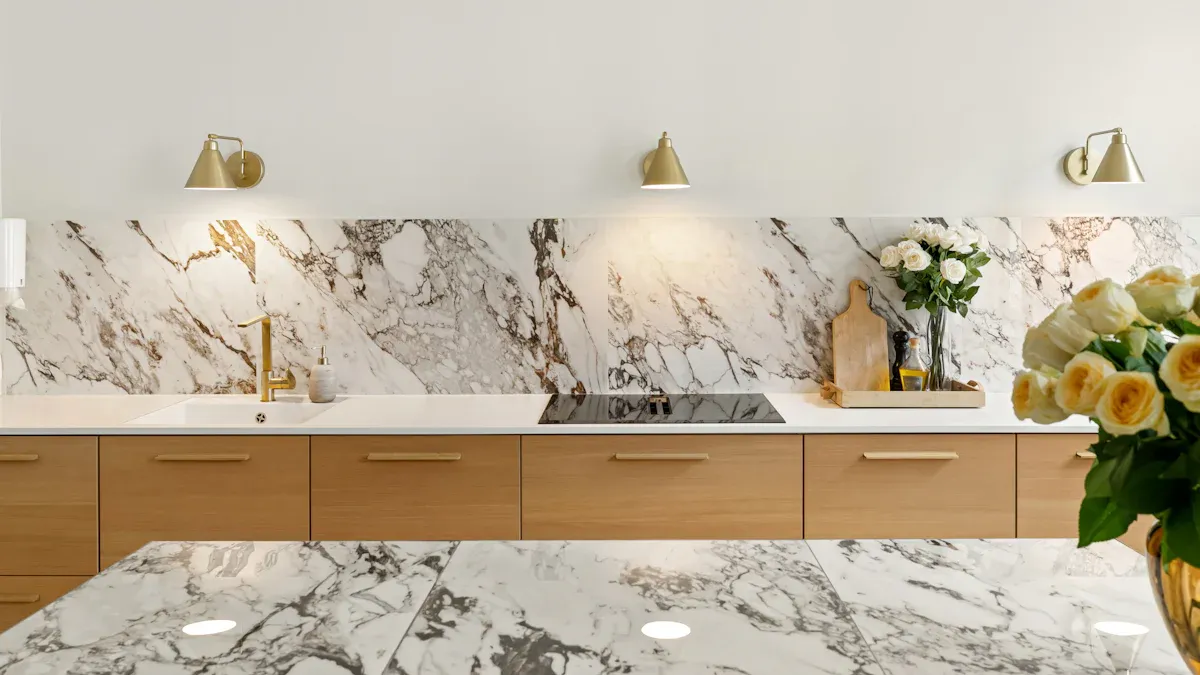
Cabinet selection plays a major role in customizing your kitchen with Calacatta Gold Quartz. Classic white cabinets create a clean, timeless look that highlights the quartz’s bold veining. Off-white or greige cabinets offer a softer contrast, making the gold and gray veins stand out. Light blonde woods and rich walnut cabinets enhance the warmth of the gold veining, while deep navy or charcoal cabinets provide a dramatic, modern contrast. For those interested in more tailored options, exploring custom cabinetry can help achieve a perfect match for your kitchen design.
Hardware and fixtures also influence the overall effect. Brushed brass or champagne bronze hardware brings out the gold accents in the quartz. Matte black hardware adds a contemporary touch, while polished nickel or chrome keeps the palette fresh and bright. Warm LED lighting can further enhance the gold veining, and metallic pendant lights echo tones found in both the quartz and cabinetry.
Tip: Balance dramatic veining by choosing simple cabinet styles and understated hardware. This approach keeps the focus on the countertop without overwhelming the space.
Backsplash and Flooring Combinations
Selecting the right backsplash and flooring is essential when investing in calacatta quartz. Marble and quartz backsplashes remain popular choices, offering a luxurious and cohesive look. A matching quartz backsplash creates a seamless, high-end appearance. Classic white subway tiles provide a neutral backdrop that balances the boldness of the countertop.
Flooring color impacts the overall atmosphere of the kitchen. Light-toned wooden floors, such as ash or white oak, create a clean contrast and enhance the airy feel of Calacatta Gold Quartz. Darker wood floors contribute to a rich, moody aesthetic and complement the bright veining. Avoid busy patterns or flooring colors that closely match the quartz’s veining to maintain a visually elegant space.
A well-coordinated kitchen design uses neutral or slightly darker backsplashes and simple flooring to let the countertop shine. This strategy ensures that each element works together, creating a harmonious and inviting kitchen.
Practical Considerations and Care
Pricing and Budget
Calacatta Gold Quartz comes in a range of prices. The cost depends on quality, design, and brand. Homeowners can expect to pay between $70 and $150 per square foot for quartz countertops. Premium options, which include intricate veining and unique finishes, often cost more. The following table shows typical price ranges:
| Category | Price Range (per square foot) |
|---|---|
| Budget quartz | $60 – $70 |
| Mid-range quartz | $60 – $100 |
| Premium quartz | $100 – $150 |
Several factors influence pricing:
- Quality and composition of the quartz
- Complexity of veining and design
- Brand and origin of the slab
- Size and thickness of the material
- Finish and pattern intricacy
- Level of customization
- Installation and fabrication costs
- Scope of the project
Planning a budget helps homeowners choose the right material for their kitchen without surprises.
Durability and Maintenance
Calacatta Gold Quartz offers excellent durability. It resists scratches and stains better than marble and granite. The table below compares these materials:
| Material | Scratch Resistance | Stain Resistance |
|---|---|---|
| Calacatta Gold Quartz | Superior | Non-porous |
| Granite | Comparable | Good |
| Marble | Lower | Prone to staining |
Daily cleaning is simple. Use mild dish soap and warm water with a soft cloth. Avoid harsh chemicals and abrasive cleaners. Prevent scratches by using cutting boards. Protect the surface from heat with trivets. For stubborn stains, use a non-abrasive cleaner or a vinegar-water mix. Gently scrape dried spills with a plastic putty knife.
Tip: Regular care keeps quartz countertops looking new for years.
Installation Tips
Proper installation ensures the best results. Always hire experienced professionals for the job. Measure the kitchen space carefully before ordering slabs. Choose the right thickness for your needs. Thicker slabs offer more strength and last longer in busy kitchens. Plan for seams and ask about jumbo slabs for large areas. Review installation and maintenance tips with your installer to avoid common mistakes. Check the warranty and keep all documentation for future reference.
Note: Good installation and regular maintenance protect your investment and keep your kitchen beautiful.
Choosing Calacatta Gold Quartz involves careful attention to slab quality, color consistency, and style compatibility. Create a checklist to compare options and consult with professionals for expert advice. Trust your personal taste to guide the final decision.
- Homes with premium quartz countertops often sell faster and at higher prices.
- Calacatta Gold Quartz resists stains and damage, making it a smart investment.
- Minor kitchen remodels with quartz can recoup up to 93% of their cost.
A beautiful kitchen starts with informed choices and confidence in your vision.
FAQ
What is the difference between Calacatta Gold Quartz and natural Calacatta marble?
Calacatta Gold Quartz is engineered for durability and stain resistance. Natural Calacatta marble offers unique veining but requires sealing and special care. Quartz provides a similar look with less maintenance and greater consistency.
Can Calacatta Gold Quartz be used for both countertops and backsplashes?
Yes, Calacatta Gold Quartz works well for countertops and backsplashes. Its non-porous surface resists stains and moisture. Many homeowners choose matching quartz for a seamless, modern kitchen design.
How do I pair Calacatta Gold Quartz with cabinets?
White, greige, or wood-tone cabinets complement Calacatta Gold Quartz. For a custom fit, explore custom cabinetry options. These choices highlight the quartz’s veining and create a balanced, stylish kitchen.
Does Calacatta Gold Quartz require special cleaning products?
No, Calacatta Gold Quartz cleans easily with mild soap and water. Avoid harsh chemicals or abrasive pads. Regular cleaning keeps the surface bright and beautiful.